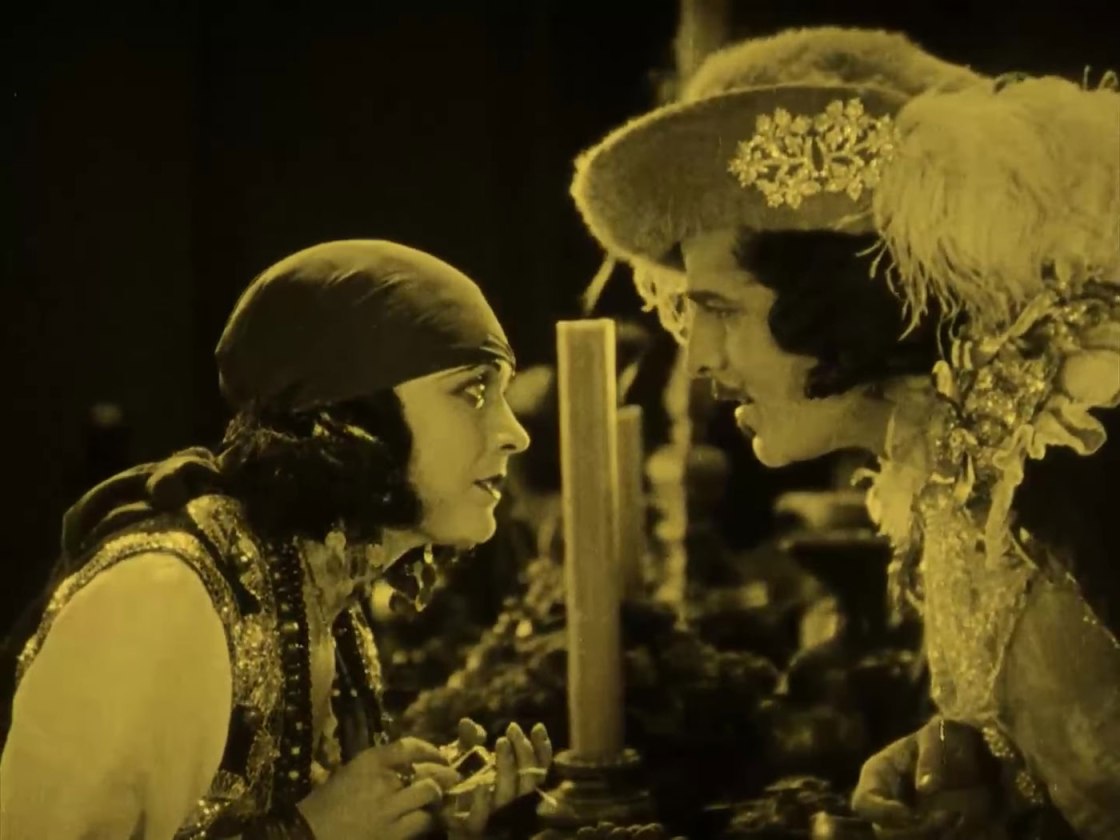
A disinherited nobleman falls in love with a bandit-dancer-fortune teller but everything goes to pieces when he breaks a royal command and is sentenced to death.
Home Media Availability: Released on Bluray.
A Return to Feral
Through accident of geography and a lot of behind-the-scenes maneuvering, Hollywood emerged as the dominant film industry after the First World War. Part of the strategy to maintain their top position, studios sought to import stars from overseas in order to monopolize top talent and keep the home audiences satisfied with their own homegrown talent in American films.
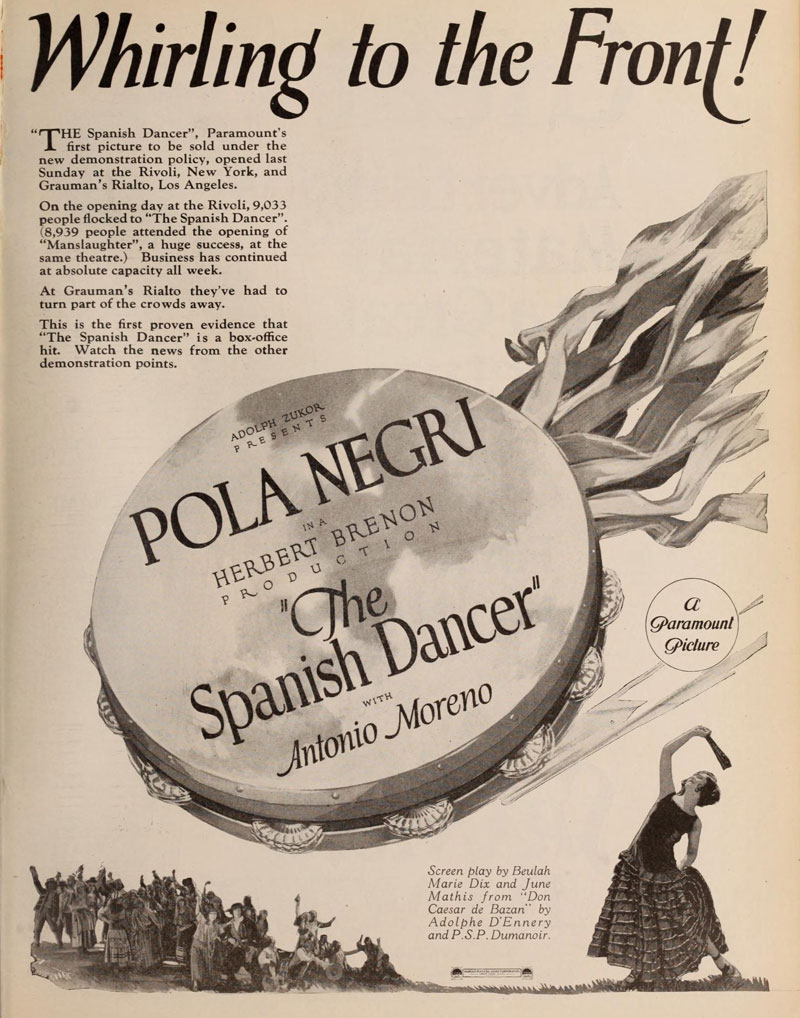
Director Ernst Lubitsch and star Pola Negri had enchanted Germany with their wild, witty and strange adventures, comedies, and historical melodramas. Hollywood saw them too and came calling. Negri had made two meh melodramas for Paramount, Belladonna and a remake of The Cheat, when Lubitsch was summoned to work for Mary Pickford at her new United Artists company and offer his famous flair for sophisticated sexiness. Pickford had punctuated titles like The Poor Little Rich Girl and Pollyanna with darker fare like Stella Maris but she wanted to expand her range even further. A saucy Lubitsch period piece was just the thing!
Meanwhile, Paramount was obviously looking to recapture the feral Pola that had so enchanted audiences in her appearances as Carmen, Madame du Barry, and the bandit queen in The Wildcat. Negri’s other films had been modern and hadn’t set critics or the box office on fire, so the plan was to send her back in time with a saucy period piece!
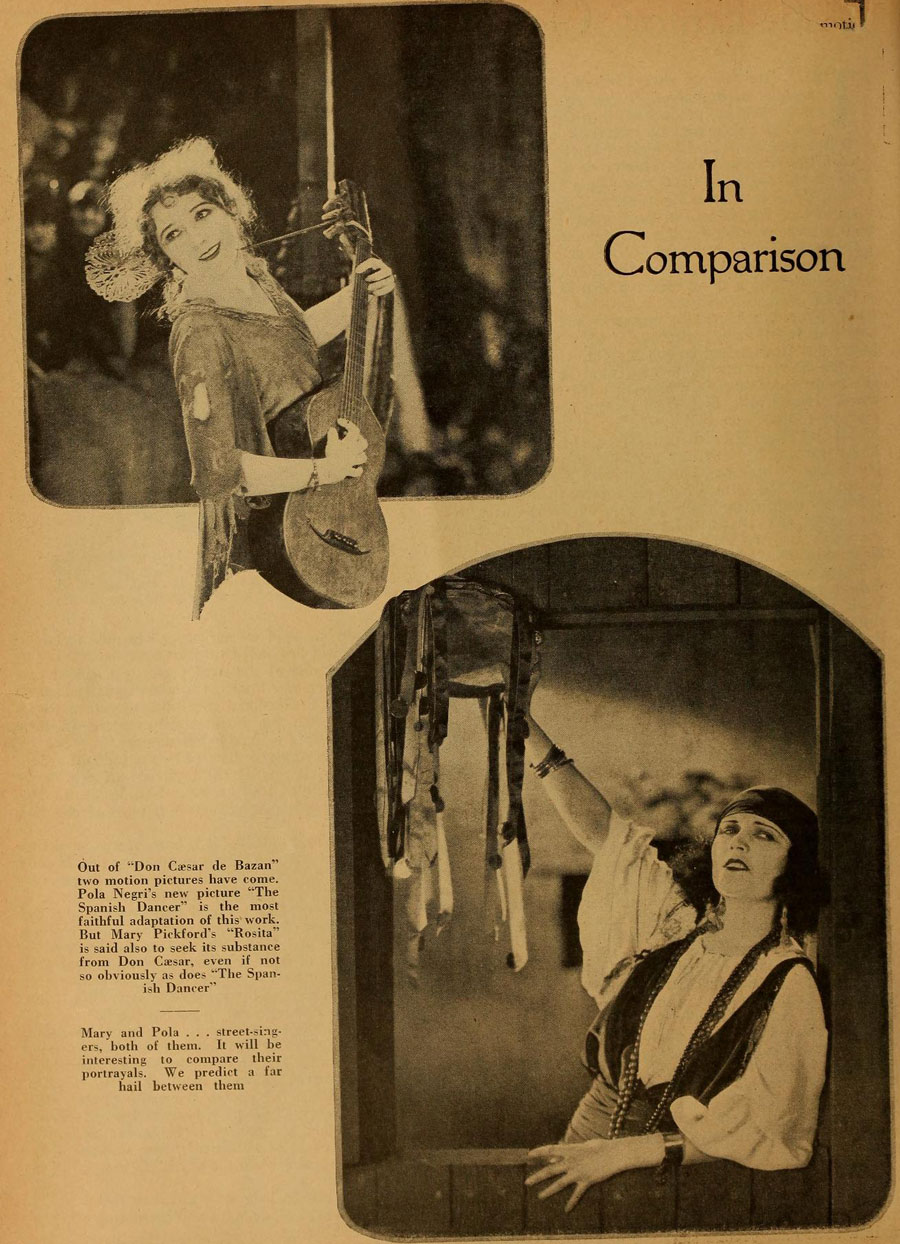
Something sexy but not too censorable. Something French! But perhaps a Spanish setting? And with a meaty role for the leading lady, something that will really give the audiences an eyefull! Don Cesar de Bazan! The very thing!
And so, in 1923, movie audiences had an opportunity to see two adaptations of a French play (based on a character by Victor Hugo and later adapted as an opera by Massenet): Mary Pickford in Ernst Lubitsch’s Rosita opposite George Walsh (the frequently nude brother of Raoul) and Pola Negri in The Spanish Dancer opposite genuine Spaniard Antonio Moreno, Herbert Brenon directing.
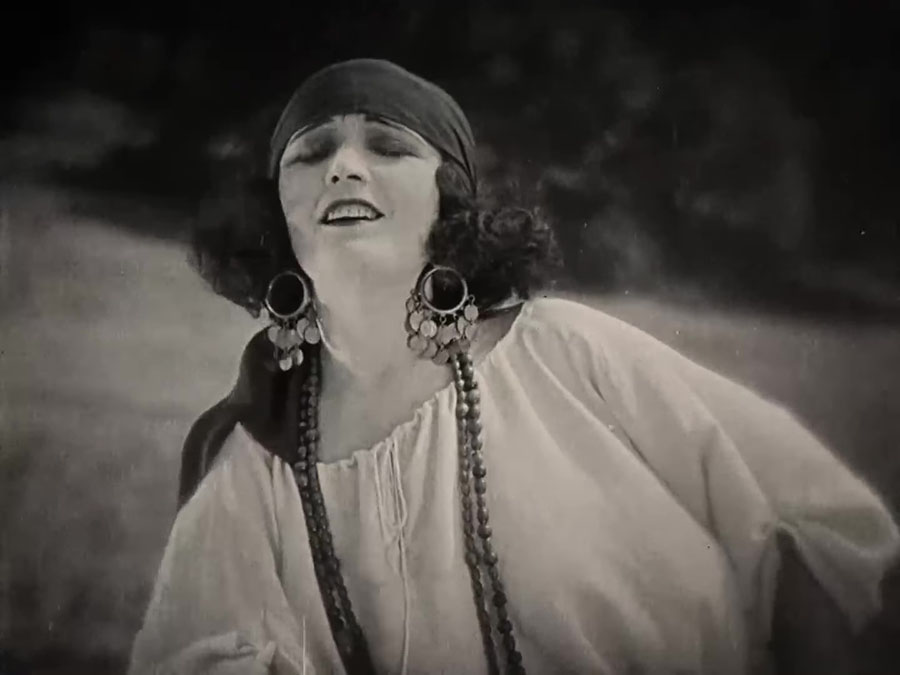
This will not be a double review of The Spanish Dancer and Rosita, though I will bring up the contrast between the two films from time to time. With two big Hollywood productions working from the same source material and released the same year, there will inevitably be topics of interest as we compare their approaches and, in fact, the films are heavily discussed and compared in 1923. One simply cannot be mentioned without acknowledging the other.
(For those of you keeping score at home, there had been dueling Carmens in 1915, dueling James Bonds in both the 1960s and 1980s, dueling volcano pictures and dueling asteroid pictures in the 1990s, and that’s just scratching the surface. Hollywood likes doing this from time to time.)
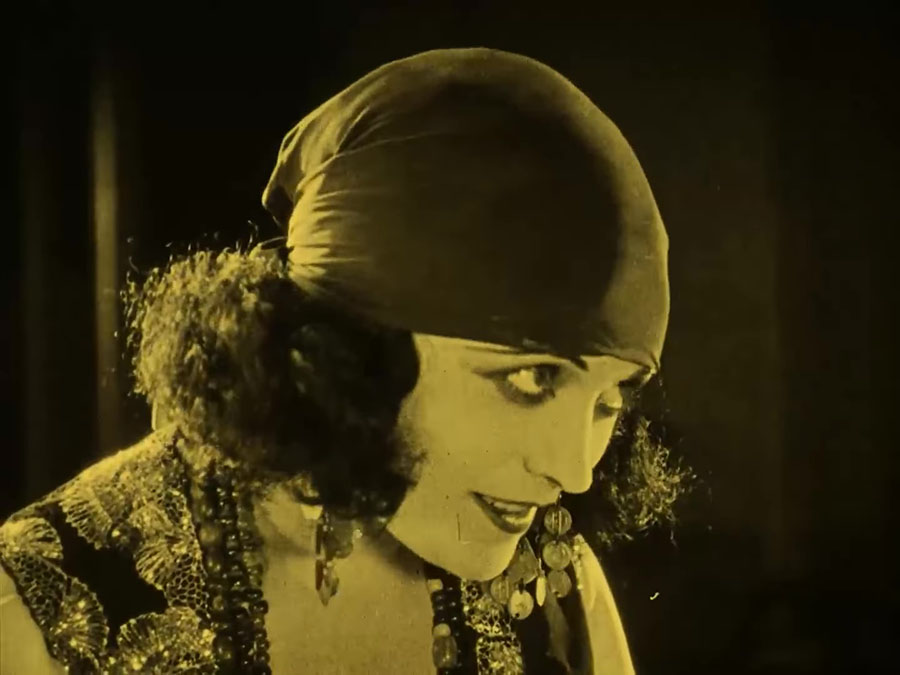
The Spanish Dancer quickly introduces Negri as Maritana, a Romani woman who leads a band of entertainers. They also dabble in some light highway robbery on the side but tonight, they have been engaged to dance at the sumptuous estate of Don Caesar de Bazan (Antonio Moreno). Caesar is throwing a lavish party for himself, a swan song. His wild ways have caught up with him and the bailiffs will be there to seize everything in the morning.
Don Caesar sees Maritana dance and it is love at first sight. She tells his fortune and tells him that there is trouble ahead and he is fated to marry a masked woman. She refuses money for her services but, unbeknownst to her, one of her fellow entertainers steals Don Caesar’s purse.

The entertainers leave and Don Caesar tells his friends the reason for his party and asks for help in keeping his estate. Steadfast and loyal while he was rich, his friends suddenly all have other appointments and evaporate. Meanwhile, Maritana hears about the stolen purse and recovers it after a vicious knife fight with the thief. As she rides to return it, she runs into Don Caesar on the run from debtors prison and the pair join forces. Don Caesar declares his love, they engage in some banditry together and vow to meet again in Seville during an upcoming festival.
King Philip IV (Wallace Beery) has problems. He is torn between his nationalist minister Don Salluste (Adolphe Menjou) and his French queen (Kathlyn Williams), who wants him to sign a mutual defense pact with her own country. Thing is, the queen has already given him a son (Anne Shirley, credited as Dawn O’Day) and, well, their bedroom is as dead as a door nail. However, she still wields some influence and Don Salluste has a cunning plan to divide the royal couple permanently. In the midst of all this, Maritana saves the prince when his horse breaks away and the grateful queen tells her that she may call on her for any favor, should she need one.
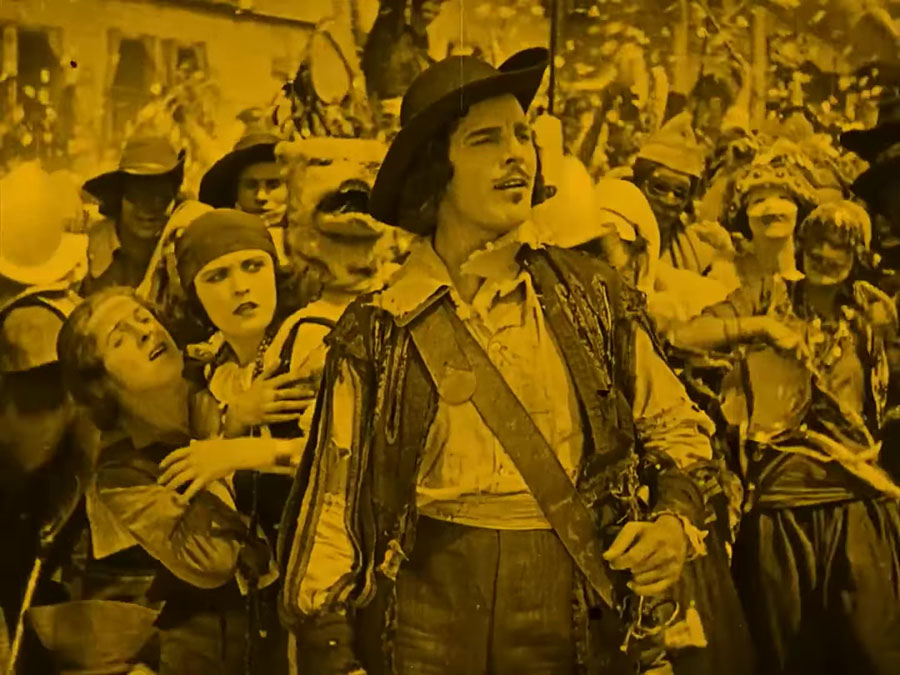
The King wants to use the festival as an excuse to enjoy a nice debauch and puts out a decree that any man who draws his sword on that day will be hanged. Can’t risk a jealous husband getting frisky! Maritana is dancing for the revelers and catches the King’s eye. He pursues her until she disappears into her grandmother’s house and declares that he must have her. Don Salluste invites Maritana to dance for the queen as a ploy to get her into the palace.
Lazarillo (Gareth Hughes) is an apprentice of the guards and the favored target of their bullying captain. Maritana spots him being beaten and interferes. Don Caesar sees Maritana fighting an armored guard and jumps into the fray, drawing a sword and running him through. He is immediately arrested along with Lazarillo and sentenced to death, with the kid sentenced to torture.
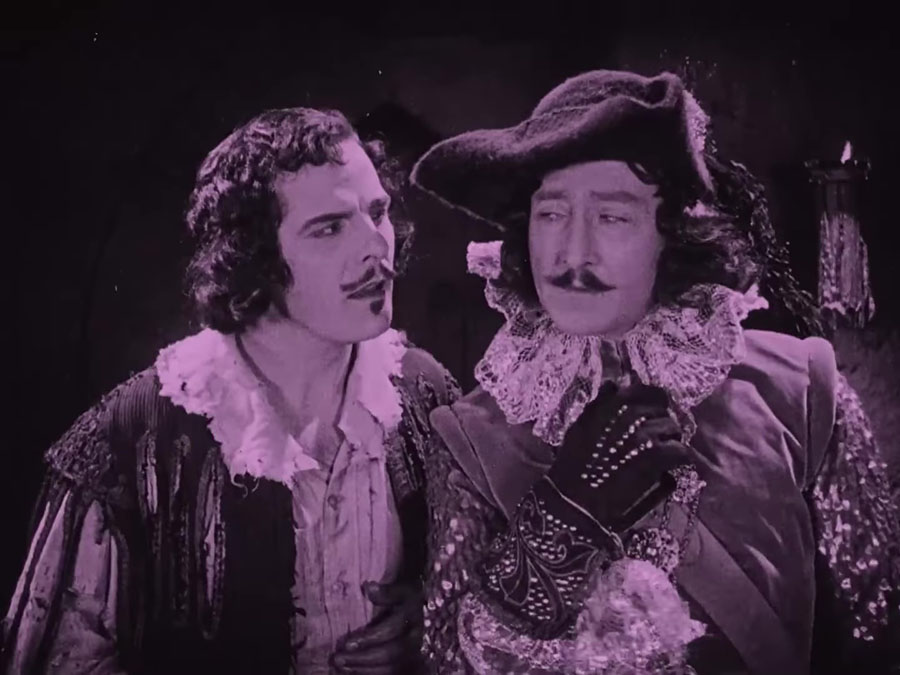
Maritana realizes that her dancing engagement is an opportunity to call in her royal favor and save Don Caesar. The Queen agrees to help and requests that the King pardon Don Caesar but Salluste has other plans. He tells the King that they can marry Maritana off to the condemned man and, as the widow of a titled nobleman, she will be socially acceptable as his mistress. The pardon is scrapped.
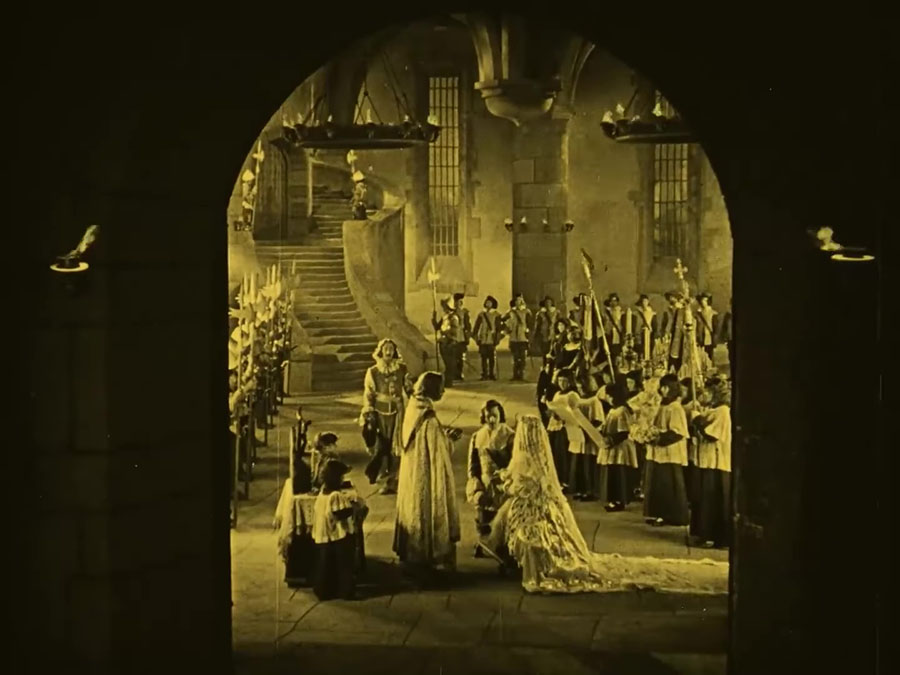
Salluste offers to let Don Caesar die honorably by firing squad rather than hanging and to let Lazarillo off the hook entirely if he will just marry a masked bride before his death. Salluste tells Maritana that if she secretly marries Don Caesar, he will be saved, but she must wear a heavy veil to avoid attracting the notice of the King. He tells the King that he will lure Maritana to a remote hunting lodge where the fresh widow can be wooed. He tells the Queen that the King will be at his hunting lodge with another woman and she can catch him red-handed. He tells the guards to shoot Don Caesar after the bride has departed.
Phew! The adaptation by June Mathis and Beulah Marie Dix is the real star of the show, adding complexity, Blackadder-style scheming and historical detail without becoming bogged down or confusing. I don’t expect full authenticity from a Hollywood historical production, I just don’t want anything to jar me out of the fantasy, and Mathis and Dix weave a convincing portrait of seventeenth century Spain.
The writing of Don Caesar is particularly good as establishing him as a maniac early on makes his later wild behavior convincing. If a guy gathers his well-heeled friends for a party to ask them to help him fight the debt bailiffs, it’s no stretch to think he would fall for a fortune teller, rob a coach, or fight a guardsman to save a kid in peril. The class divide is glossed over but it works in the context of the adaptation.
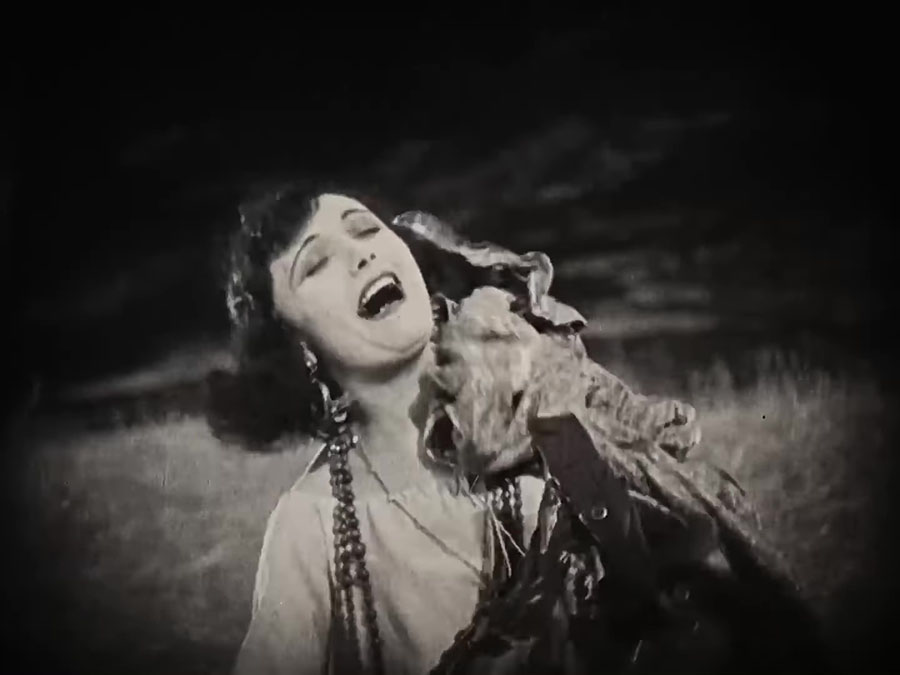
However, this was very much a vehicle for Negri and the film weaves the best bits from her German film appearances together to create an appealing patchwork. The feral sexiness of Carmen, the royal appeal of Madame du Barry, the wild banditry from The Wildcat, Maritana has it all. She also throws in some humor, I loved the bit where her pannier skirts get caught in the doorway. Photoplay raved:
“After being wasted in Bella Donna and The Cheat. Pola Negri comes back to her own in this picture. She is again La Negri of Passion. [note: Passion was Madame du Barry’s American release title] She has shed the veneer of sophistication and has reverted to the primitive woman type.”
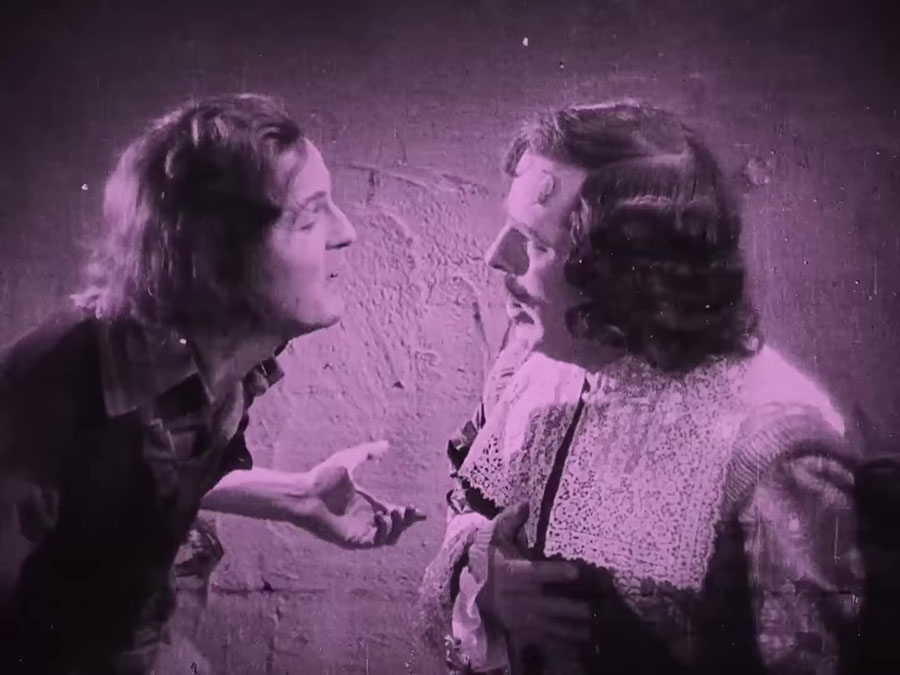
The main heroes do overplay a bit, Antonio Moreno channels a caffeinated Fairbanks sans stunts and Gareth Hughes (who probably wished he had never left Wales here) goes heavy in for the sad sack pathos as the designated victim of the piece, but neither are a dealbreaker here. Adolphe Menjou turns in fine work as the oily Don Salluste and Wallace Beery, generally an uncontrollable ham, is kept firmly under control by Herbert Brenon, who specialized in taming temperamental stars.
I must especially praise Kathlyn Williams, who was never less than excellent in any role and who turns in an excellent performance as the jealous and neglected queen. She sells us on her hungering for the touch of Beery, which is no small feat. I always am happy to see Williams in a cast list because I know she will be a highlight.
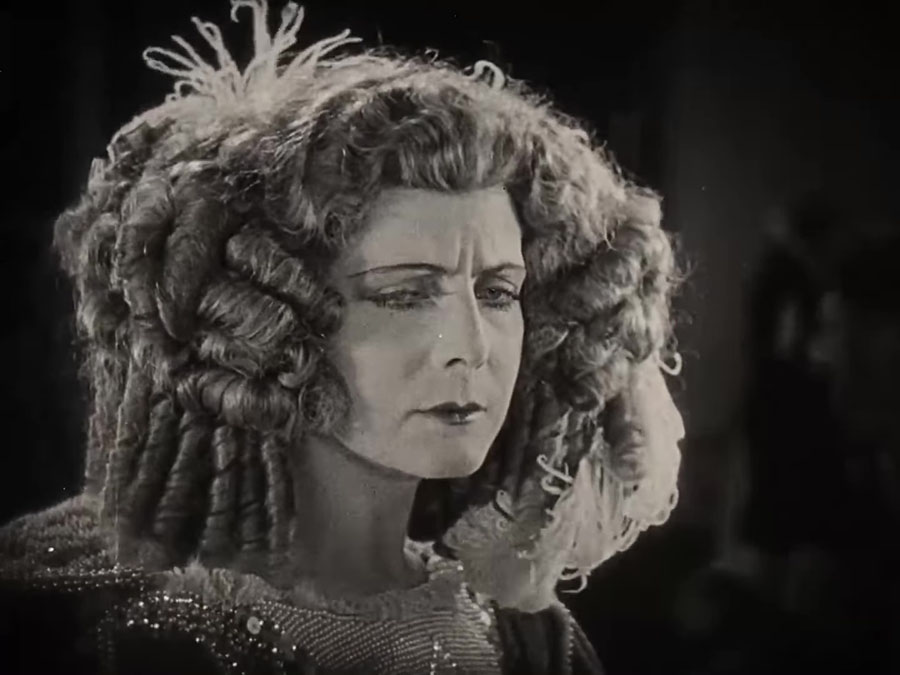
And, of course, I have to marvel at the international flavor of studio era Hollywood, in which an Irish director could direct a Polish leading lady, a Spanish leading man, a French-American villain, a Welsh supporting character and assorted Americans in sunny Spain via California.
The Spanish Dancer was met with strong reviews and stronger box office, showing that Paramount had made the correct gamble in throwing money at Negri. The film’s massive budget is on display in every scene, with lavish sets, hoards of extras, everyone lavishly costumed, and all of this captured stylishly by cinematographer James Wong Howe. Nobody just enters the room in the palace, there must be an announcement and an entourage of attendants, few Hollywood movies have captured the simultaneous loneliness and crowded claustrophobia of a European palace better.
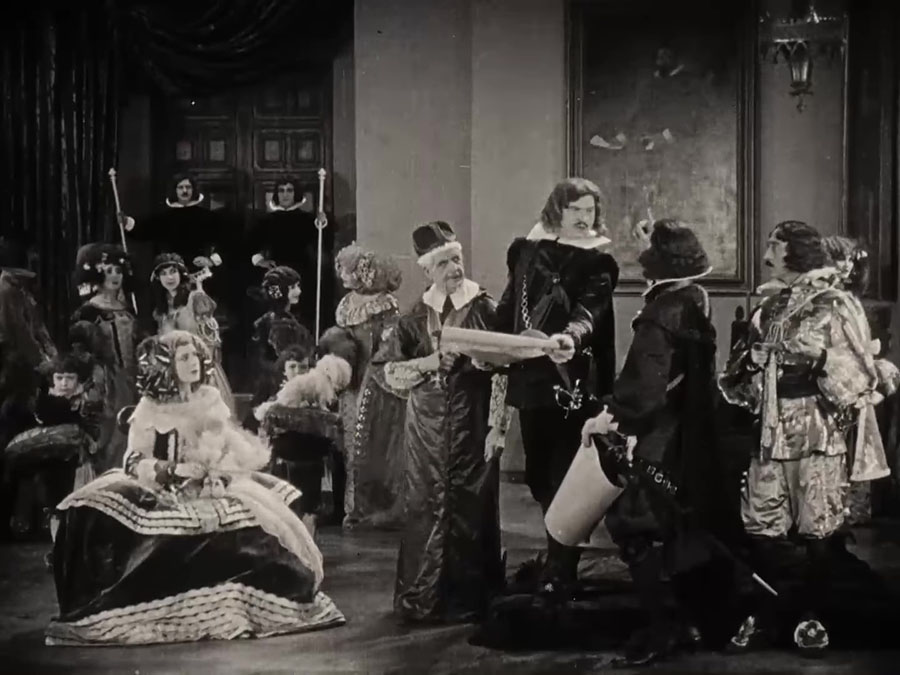
While the play and opera and their influences were all firmly set during the reign of Charles II, The Spanish Dancer sends all the events back in time to the era of his father, Philip IV, and makes tensions between France and Spain central to the plot rather than just plain sex. This was probably an attempt to head off censorship concerns as historical education could be used to offset accusations of sexiness. (A similar ploy was used to excuse Theda Bara’s paste-on wardrobe in Cleopatra.)
On a side note, Rosita also eschewed Charles, catapulting the action into the future and featuring an unnamed king. The costuming seems to place it in the era of Ferdinand VII, the chaotic and despotic monarch deposed for a time by Napoleon. While The Spanish Dancer focuses on the formality of court and just how many layers of sumptuously-dressed and nefariously scheming humans are involved in a monarchy, Rosita is a giant playground foofaraw with a childish king at the center. The Spanish Dancer is likely more accurate to history but Rosita is true to human nature.
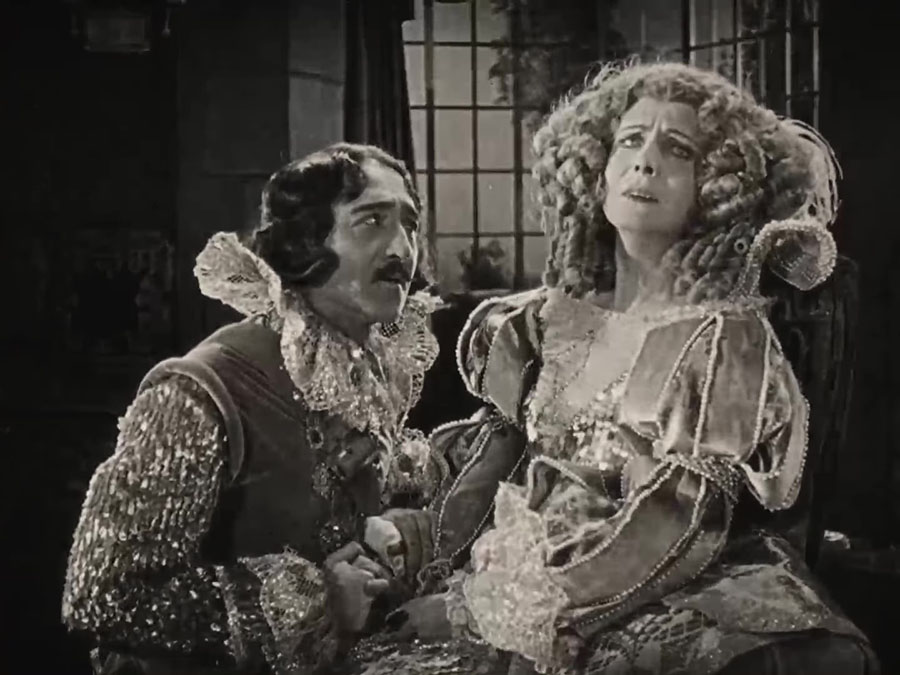
The Spanish Dancer succeeded in reinforcing Negri’s sexy reputation in America while staying clear of censorship. It proved that she could carry the same big budget films she had headlined in Germany and set her up for Hollywood success for the remainder of the silent era. Rosita, meanwhile, received positive notices but it failed to please the most important critic of all: producer-star Mary Pickford. She disliked working with Lubitsch and disliked the finished product, considering it a disaster. Most modern critics are more generous, appreciating the blend of Pickford’s North American charm with Lubitsch’s continental sensibilities.

The Spanish Dancer is a Hollywood production through and through, slick as satin and every component refined and sleek. It’s a terrific showcase for Negri, as she romances and stabs her way across Californian Spain with gusto. When fans of the era talk about the scale and quality of Hollywood epics, this is the kind of picture they mean. Definitely worth seeing.
Where can I see it?
☙❦❧
Like what you’re reading? Please consider sponsoring me on Patreon. All patrons will get early previews of upcoming features, exclusive polls and other goodies.
Disclosure: Some links included in this post may be affiliate links to products sold by Amazon and as an Amazon Associate I earn from qualifying purchases.
 Movies Silently