
A pair of domestic servants dream of glamorous careers fighting crime but when their boss finds them slacking off, they find themselves out of a job and at liberty to pursue their true calling.
Home Media Availability: Stream on YouTube
By the Book
The late 1900s and 1910s were a golden age for women in the action adventure genre. Serial queens thrilled audiences with their death-defying antics, audiences lined up to see the next peril of Pauline or adventure of Kathlyn. Gene Gauntier was the Girl Spy, Ruth Roland (and later Cleo Ridgely) fought crime on the police payroll as the Girl Detective, both series for Kalem.

Any cultural trend, new or old, would get a cinematic spoofing sooner or later and comedian Gale Henry was the goofy opposite number to the sleek and athletic action heroines. Henry’s stock in trade was a gawky, bony form with limbs flying in every direction, ideal for the wacky and often surreal nature of her comedies.
The Masked Marvels opens with Henry hard at work as a cook but she’s not cooking or cleaning. Instead, she is crawling around with a magnifying glass, trying to find clues and make an arrest. She practices her handcuffing technique on the shoes belonging to the butler (Milton Sims).

(Incidentally, IMDB has listed brawny he-man performer Milton Sills as the butler in this picture, claiming that he was working under the name Sims. Sills is nowhere to be seen in the picture, of course, and this seems to be rooted in confusion with the similarly-named Sims. I have submitted a correction request with a studio directory listing both men, showing that Sims and Sills were different people, so we will see if it takes. The mix up is funny, though, because Sills specialized in muscular, dark and violent action-dramas and Sims is, well, you’ll see.)
Milton is just as obsessed with criminal investigation as Gale and is glued to his copy of How to Become a Detective, practicing his disguise techniques with a cache of hats hidden in the broiler. Gale also gets in on the act, gluing her false hairpieces to her chin as a beard and mustache.

The lady of the house enters and fires the two on the spot. But is this a disaster or an opportunity? There has been a rash of burglaries, maybe the police just need a bit of help… Gale dashes off to the police department to offer her services as detective. It works in the movies, right? The Keystone Cops-style officers decide to send her on a phony mission to cure her of her delusions, asking her to investigate the suspicious goings-on at Goofy Manor. Milton shows up a few minutes later and they give him the same treatment.
Gale and Milton separately break into the manor– it’s not burglary if you’re a detective– and begin to investigate. They rummage through the place, test out all their best disguises… and alert the owner of the house that someone has broken in. Will Gale and Milton prove themselves or will they learn that some things just can’t be taught in books? See The Masked Marvels to find out!
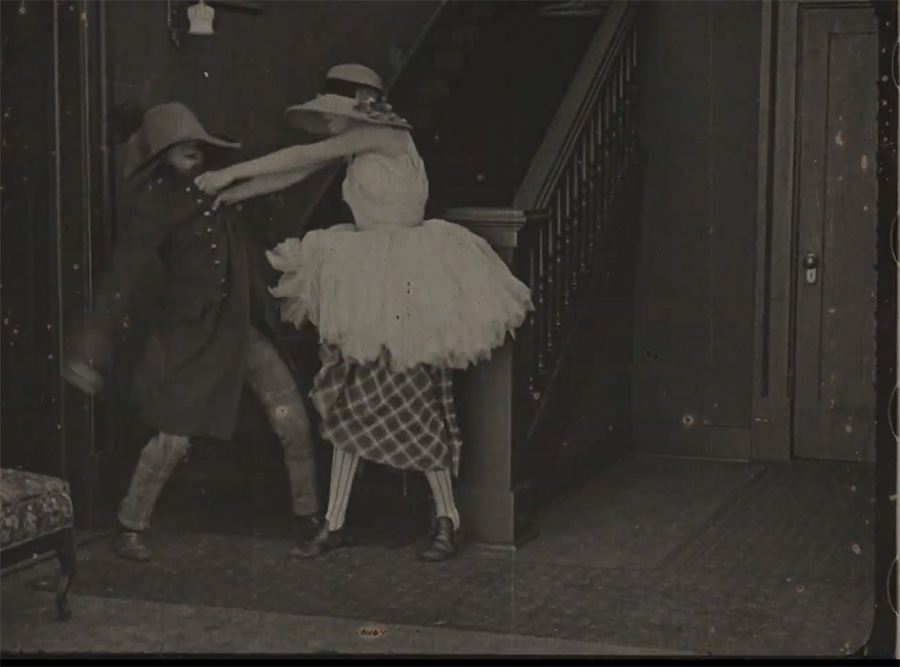
(Spoiler) The owner of the house is the chief of police and he quickly captures the pair, leaving a note for the police that he is seeing about having them locked up. This is a somewhat dark turn to the comedy and I feel like a modern (or at least Mid-Century) take on the story would have featured Henry and Sims accidentally succeeding as detectives and somehow saving the day. That said, I actually find the old school “consequences to their delusions” ending to be refreshing, especially in our modern world “think happy thoughts” soup of toxic positivity. After all, burglary still counts even if you think you are solving a mystery.
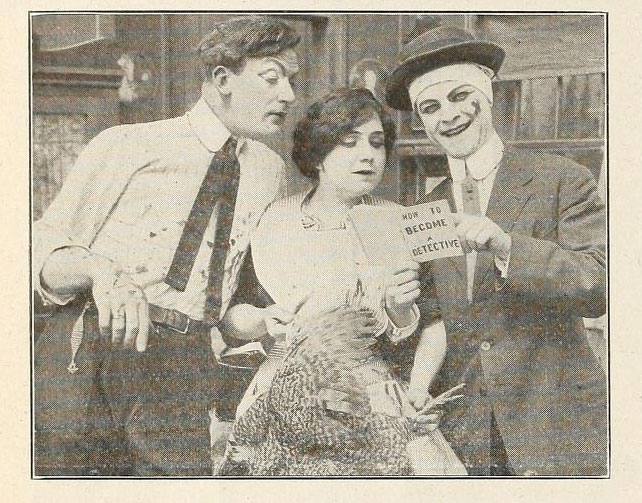
Fans of silent comedy will note that Henry and Sims are each glued to a copy of How to Become a Detective. The gag is mostly remembered today for its use in Sherlock Jr. (1924) and some modern viewers have complained that its use in The Monster (1925) was a ripoff of Keaton. However, as we see in this picture, the prop book had been showing up in films for years. The earliest occurrence I have found was released in 1912, Billy the Detective.
How-to books and correspondence courses were wildly popular just as the movies were being invented and I imagine more than a few professionals were tired of eager, book-educated amateurs. In fact, a correspondence course on film acting (and there were many) was the central gag of the popular novel, play and much-remade film Merton of the Movies. Books solemnly promised to teach readers how to fly, drive, build an aeroplane, grow a personality and become an inventor. A detective isn’t so very out of place.

So, I knew the context of the gag but I wondered if How to Become a Detective was a real book at any point. Certainly, it would be an incredibly inappropriate subject for book learning but, as we can see, there were worse subjects with their very own books. I couldn’t find any titles that matched the description, so perhaps it was just a prop after all?
While researching this review and looking for other occurrences of the gag, I found a review of a 1917 Constance Talmadge vehicle called Betsy’s Burglar, which also featured the trope. Wid’s was a trade magazine and its reviews focused on how theaters could publicize the movies they chose to screen. Here was one suggestion for the picture:
I would refer particularly to the correspondence-school detective by some such advertising as this: “Have you ever seen the ads, ‘How to become a detective by mail?” See one of the results in ‘Betsy’s Burglar.’”
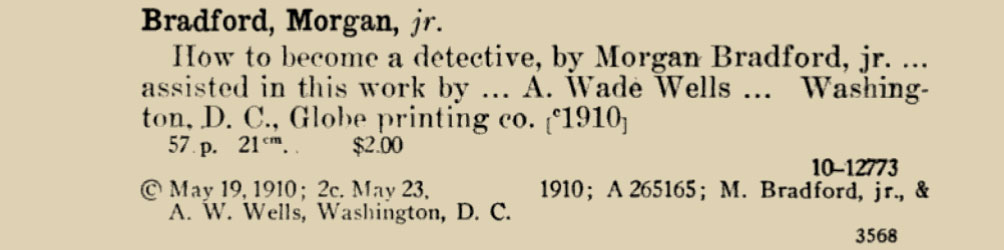
This indicates that such courses were both real and familiar to viewers of the era. I hit the stacks again and this time dug into copyright information. Voila! Morgan Bradford, Jr. and A. Wade Wells copyrighted How to Become a Detective on May 19, 1910, which fits perfectly with the timeline of the title showing up in movie comedies. (Now I just need to get my hands on a copy!)
There is a rich vein of comedy to be mined in the “book learning vs practical application” category and it remains popular on the screen. Henry and Sims take things to a frenzied level as they don and throw off disguises and dash through the manner. In my review of The Detectress, I noted that Henry’s comedy heads into almost side scrolling video game territory and The Masked Marvels has the vibe of an early 3D platform jumper. I realize there is probably of market of five or so people for a game adaptation but I would play this!
Henry is a game and lively heroine and she is ably supported by the diminutive Sims, with both eagerly climbing, scaling, crawling and tumbling around the house as they investigate. It’s a rather broad comedy but a single reel (in the 10-12 minute ballpark, depending on who is doing the cranking) can be broader because it needs to have zip zap impact. Plus, the slapstick here is more about showmanship than violence, so it’s more my thing. All due kudos to director Allen Curtis.

The Masked Marvels is a short and sweet comedy, coming in fast, hitting with a bang and going as mad as possible in a single reel. The off-brand Keystone Cops are, perhaps, not the most original element but any scene with Henry sparkles with her kooky charisma. Great fun.
Where can I see it?
Available on YouTube, sourced from the Library of Congress by Joseph Blough. I would recommend slowing the speed down to .75 or .5 as it may be a bit rapid.
☙❦❧
Like what you’re reading? Please consider sponsoring me on Patreon. All patrons will get early previews of upcoming features, exclusive polls and other goodies.
Disclosure: Some links included in this post may be affiliate links to products sold by Amazon and as an Amazon Associate I earn from qualifying purchases.
 Movies Silently
The “How to Become a Detective” trend really took off in May 1913 when a long series of comic stories by Ellis Parker Butler about Philo Gubb, a gangling, not terribly bright paperhanger turned amateur Sherlock, began running in *The Red Book Magazine*. Butler would continue writing about the character into the 1930s. Pierce Kingsley filmed three of the Philo Gubb stories for Serial in 1916 with Edwin Stevens in the title role; in 1921, Webster Cullison made at least three more (of a planned thirty-five) for his “Clever Comedies” with Victor Potel as Philo (see ad at bottom of page). Unfortunately, none of the shorts seems to have survived.