
Thippe has a secret: many years ago, he had a youthful fling and, well, has been faithfully paying child support ever since. When his friend stumbles onto this fact, he persuades Thippe to muster up courage to finally meet his boy.
Home Media Availability: Stream courtesy of the Danish Film Institute.
Must Be Something in the Water
Out-of-wedlock children, the sexual double standard, birth control, abortion and single motherhood were all heavily featured in 1910s American films. In general, these plot elements were treated as serious, tragic, a big social discussion. I mention this because His Phony Son is none of these things and is therefore extremely interesting to viewers who are more accustomed to American silents of the decade.

Danish comedy director Lau Lauritzen, Sr. had hit his stride as a maker of popular comedies. Lauritzen can be best compared to the Hal Roach house style. That is, he didn’t entirely eschew slapstick but his comedies tended to be based on characters and situations more than faw down go boom. (Though faw down go boom could be in the mix.)
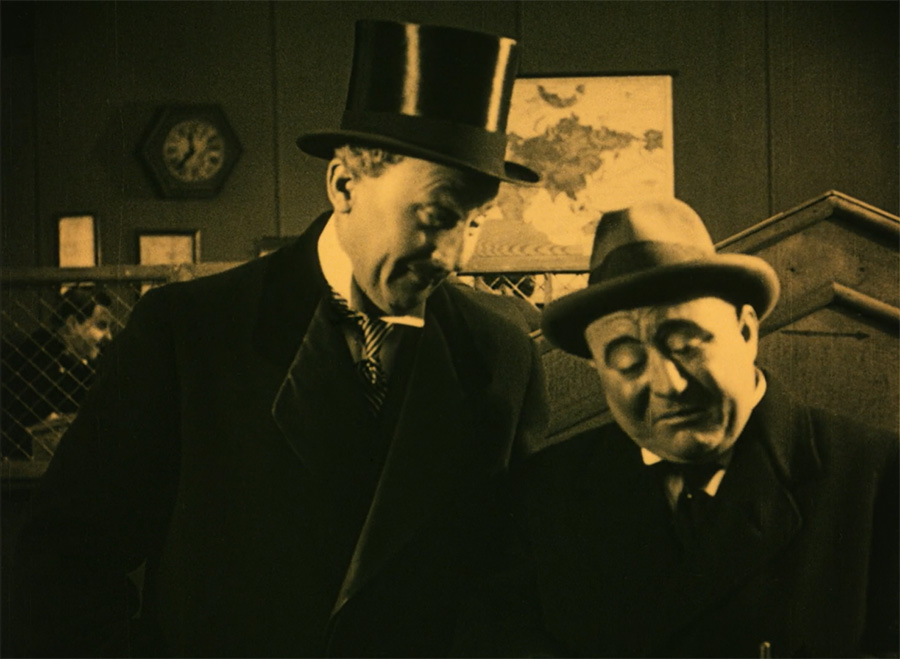
His Phony Son revolves around the secrets of Mr. Thippe (Frederik Buch), a merchant who goes to the post office every month in order to send child support to Augusta (Kate Fabian). Some fifteen years before, Thippe had been a young apprentice and Augusta had been a laundress. Love was in the air but then she moved away. Some months later, she sent word that she had given birth to his son.
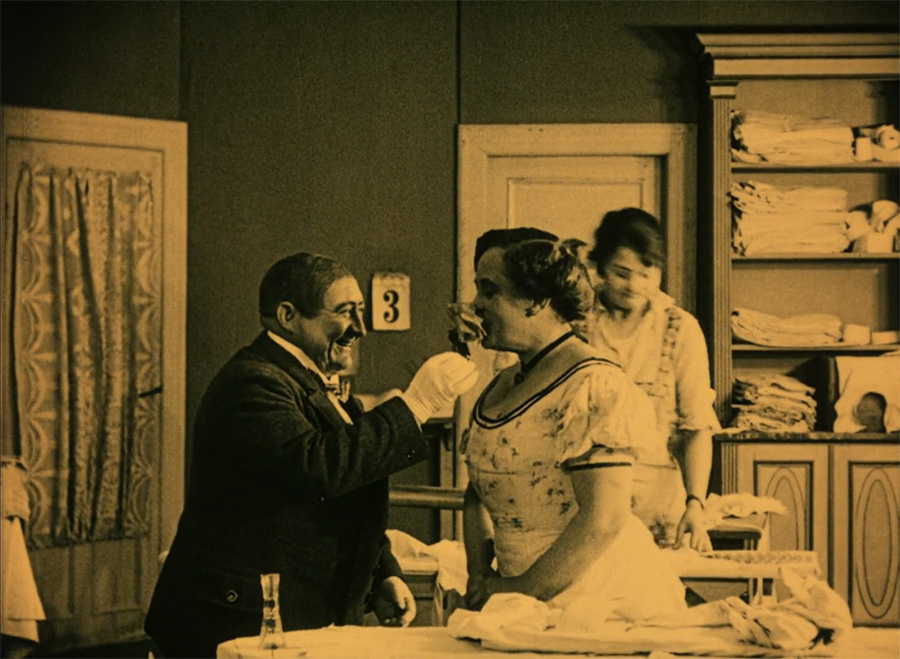
Thippe is now married to a formidable woman (Betzy Kofoed) and doesn’t have the nerve to ask to see his son, he just pays monthly like clockwork. His colleague, Buller (Frederik Jacobsen) sees him in the post office and reads his letter over his shoulder. Thippe confesses all and Buller offers to help him get to Copenhagen to meet his son.
Mrs. Thippe doesn’t think her husband will be much help on a business trip but gives permission. Still, Thippe has seen detective films and knows more precautions are needed, so he wraps his face in a scarf to enter the hotel in Copenhagen, registers under a false name and then dons glasses and a fake mustache to go find Augusta. This behavior alerts the hotel staff and they call the police.
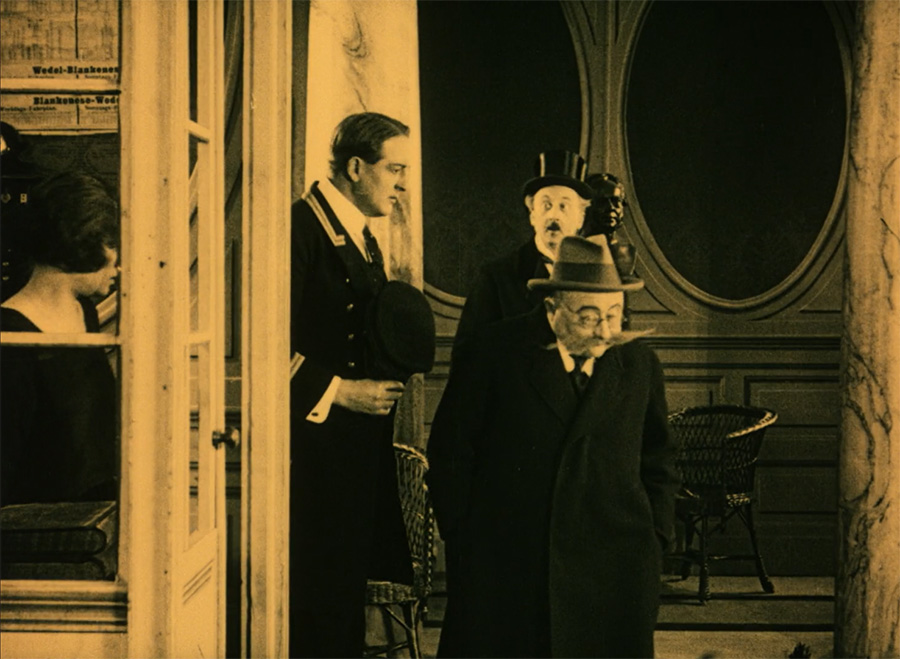
Meanwhile, Augusta is in a panic. You see, she never gave birth to a son, she just was hoping to get some money out of naive Thippe and her plan has been working beautifully for the last fourteen years. Now he is coming to see his son and she has no son to show him. Her shoemaker friend, Tjenss (Carl Schenstrøm), offers to pose as the boy if she pays him with a pot of lard. The fact that he is well over six feet tall is neither here nor there.
Thippe reunites with his son and is impressed by his size. Surely such a tall boy is meant for wonderful things! However, the good mood doesn’t last because the police arrest Thippe. They looked up his phony name and since it didn’t check out, they want to know what is really going on. Thippe doesn’t want to explain but he does give his real name and the police send for his wife to confirm his identity.

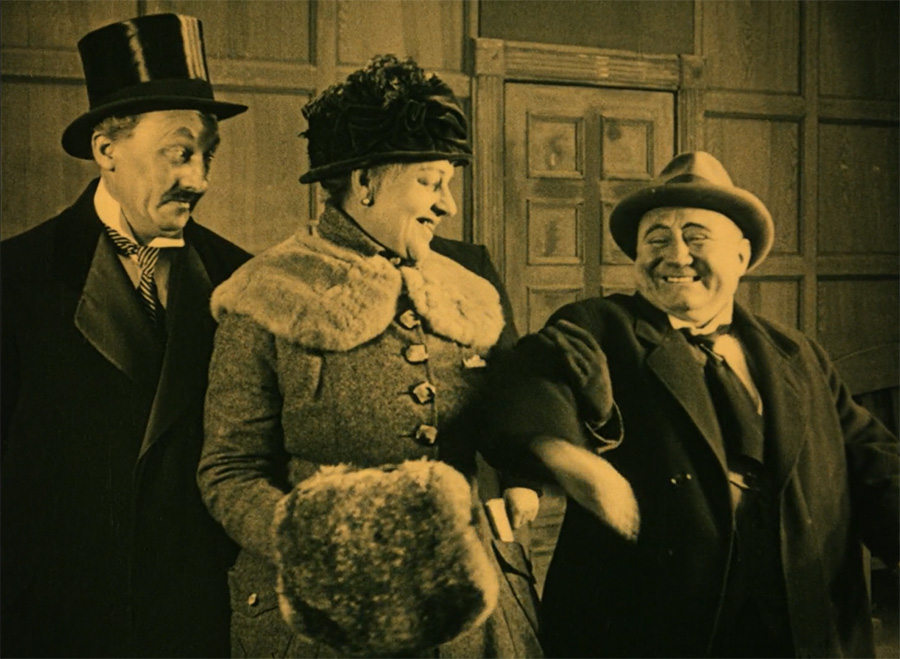
She arrives and boxes his ears, proving she is his wife beyond a shadow of a doubt. Buller explains the real reason they are in Copenhagen and, rather than being upset, Mrs. Thippe is delighted at the prospect of a stepson, vowing to treat him as her own.
At this point, the film cuts off abruptly but the original scenario reveals that the final scene involves Mr. and Mrs. Thippe returning to see his son, Thippe realizing the truth and attacking him, furiously leaping up and slapping him. It was probably a hilarious scene, considering the height difference between Buch and Schenstrøm. Once his phony son flees, Thippe tearfully bemoans that he had been so happy for his son.
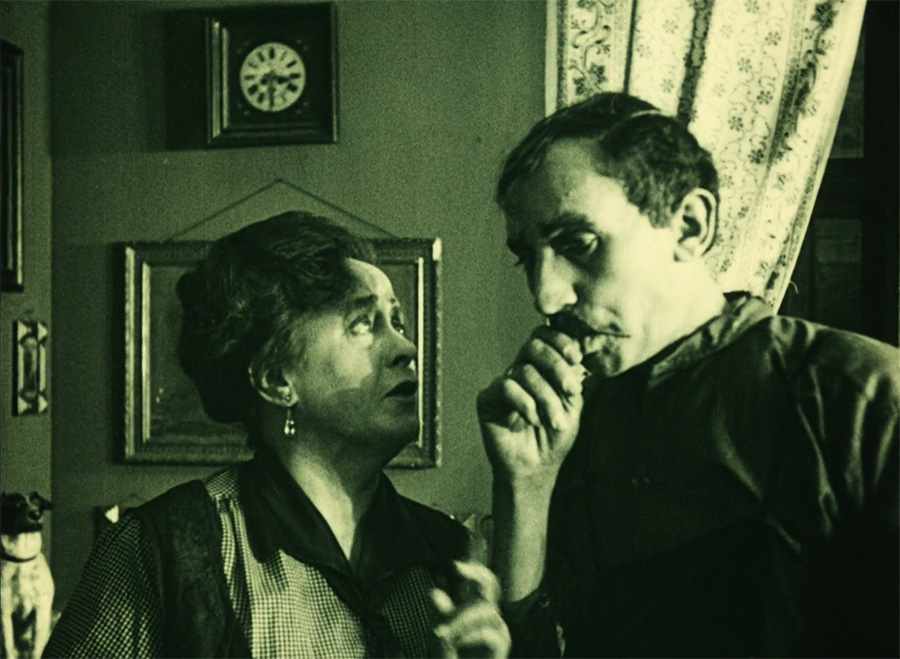
Well, that was fun! I always enjoy tossing a Lauritzen-directed title into my review schedule because I know I am guaranteed a good time and this picture is no exception. Lauritzen and his usual stable of actors deliver, especially Buch and Schenstrøm. These actors tended to provide the rougher physical comedy in Lauritzen’s 1910s output and they are clearly enjoying themselves as they lope, flop and embrace. I also enjoyed Kofoed as the intimidating wife whose exasperation with her husband proves to be entirely justified. And, of course, the self-referential “he’s watched too many crime pictures” gags poking fun at Denmark’s cinematic crime wave is quite amusing.
As mentioned above, His Phony Son is also enjoyable for viewers more familiar with American silent films because it is so decidedly un-American in its approach. There are dozens of a ways a father might become separated from their born-in-wedlock child and therefore will not recognize them once reunited and Hollywood probably used every single one. There were examples of comedies centering around out-of-wedlock fathers (the 1931 Pre-Code Marion Davies picture The Bachelor Father springs to mind) as men’s pasts were never as regulated as those of women but straightforward illegitimate kids were the exception rather than the rule.
As for the women, in an effort to counter moralizing condemnations of single mothers (while letting the fathers off the hook), American silent films tended to kill them and/or their baby off in lovingly shot, aesthetically pleasing ways for maximum heartrending. If they did live, the single mothers were treated as some combination of saint, Hester Prynne, or lost puppy (Tess of the Storm Country and The White Rose being prime examples). Or, in the Hays Code era, the single moms were actually kind-hearted screwball dames who ended up with a kid innocently but everyone thought they’d been no better than they ought to be. Or a Preston Sturges-type storyline muddied the waters so much, the censors didn’t know which way to look. Augusta’s obvious and unashamed past and unambiguous, unpunished grift would have been exactly the kinds of story elements American censors wanted to stamp out.
His Phony Son is exactly the kind of straightforward, good-natured comedy that I expect from Danish productions generally and Lauritzen films in particular. The goofy plot, talented acting troupe and contrast with the more censorious and serious American output on the topic combine to make this both an amusing and historically rewarding viewing experience.
Where can I see it?
Stream courtesy of the Danish Film Institute. The print is a German release version and the film has German title cards with Danish subtitles. There are currently no English subtitles.
☙❦❧
Like what you’re reading? Please consider sponsoring me on Patreon. All patrons will get early previews of upcoming features, exclusive polls and other goodies.
Disclosure: Some links included in this post may be affiliate links to products sold by Amazon and as an Amazon Associate I earn from qualifying purchases.
 Movies Silently