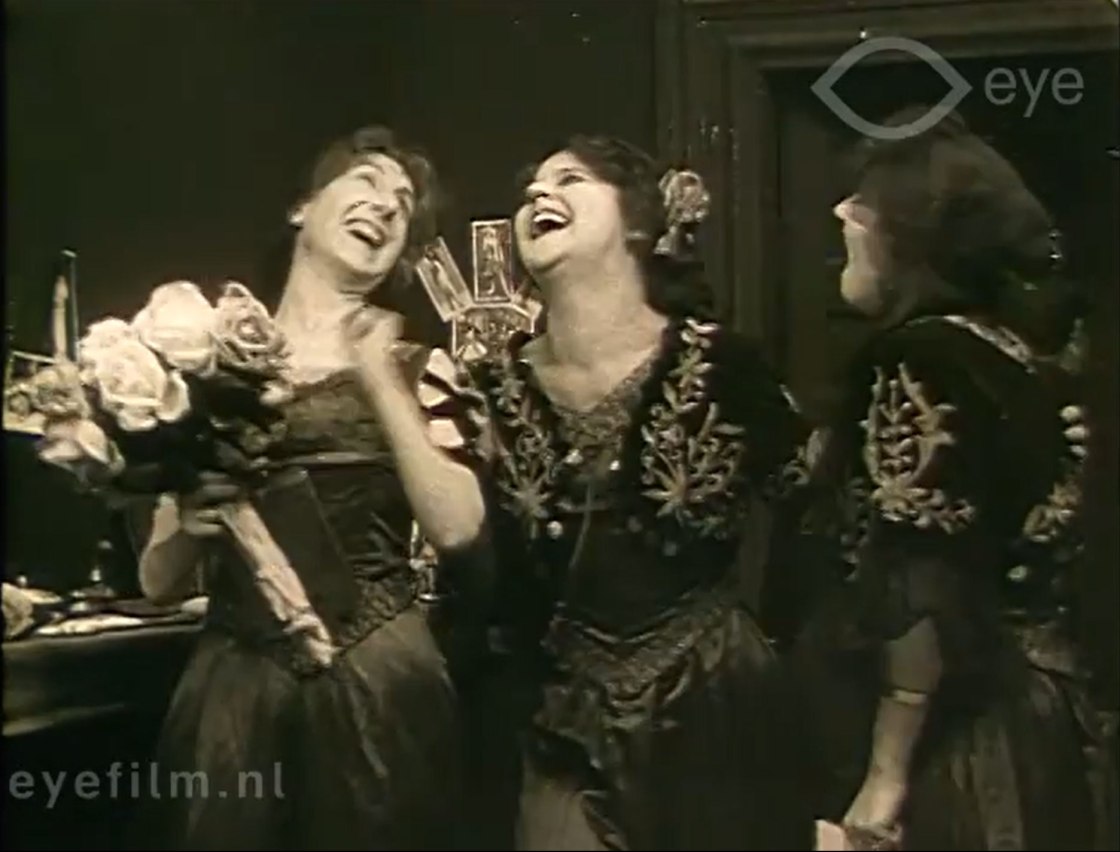
Cutey goes to the show in order to catch himself a chorus girl, or two, or three. He gets more than he bargained for when Flora Finch decides that he is the man for her and Cutey soon discovers the dangers of crosses the chorus girl sisterhood.
Home Media Availability: Stream Courtesy of EYE.
Waiting at the Stage Door
In the 1910s, Vitagraph had positioned itself as the place for a more sophisticated type of comedy. While rough slapstick was big business, Vitagraph was marketing domestic comedies from Mr. and Mrs. Sidney Drew, as well as the antics of screen team John Bunny and Flora Finch. They had other series in the works as well, including the Cutey films starring Wally Van as a man about town in the Max Linder mode.
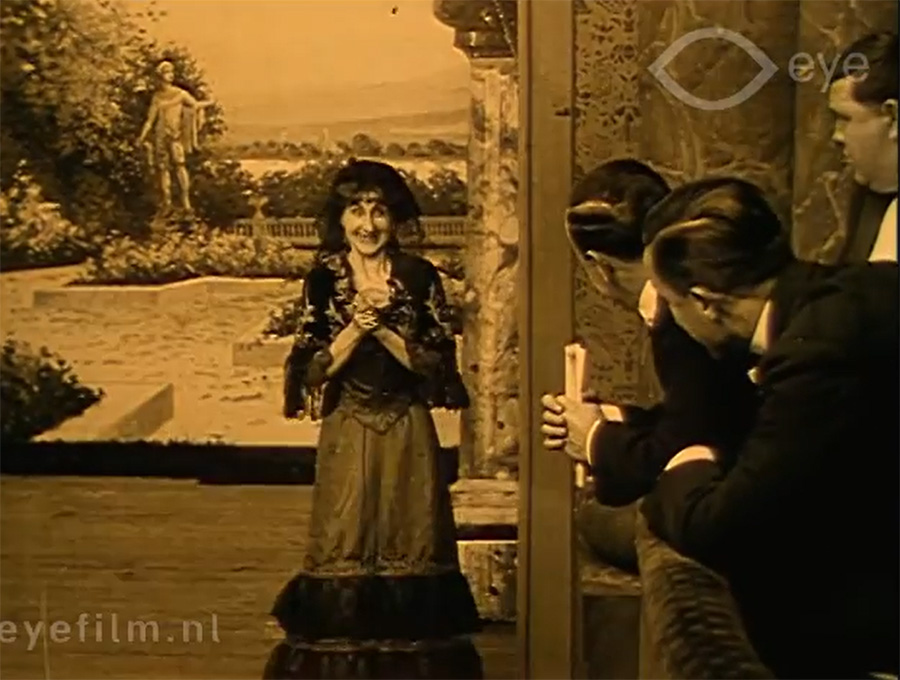
Cutey and the Chorus Girls begins, unsurprisingly, with Cutey enjoying a stage performance from the balcony with his friends (Hughie Mack and Harry Lambart). Cutey is looking for love and casts his net wide, eyeing multiple women at once and settling on two, Dolly (Lillian Walker) and Kitty (Leah Baird), for his attentions. Both openly snub him from the stage and, in the bustle of the performance, it is Flora (Flora Finch) who notices his signals and thinks he fancies her.
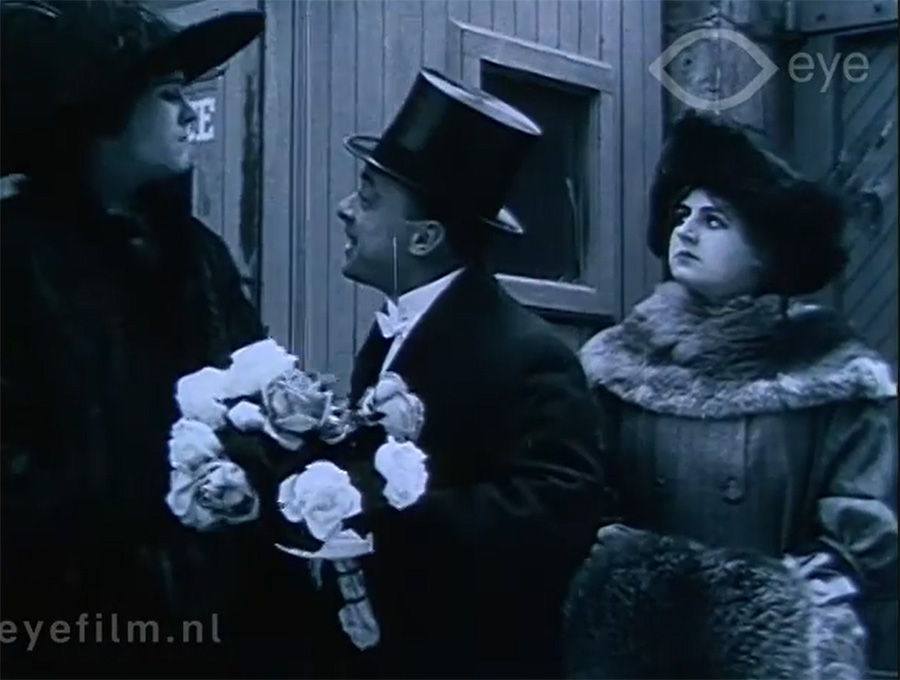
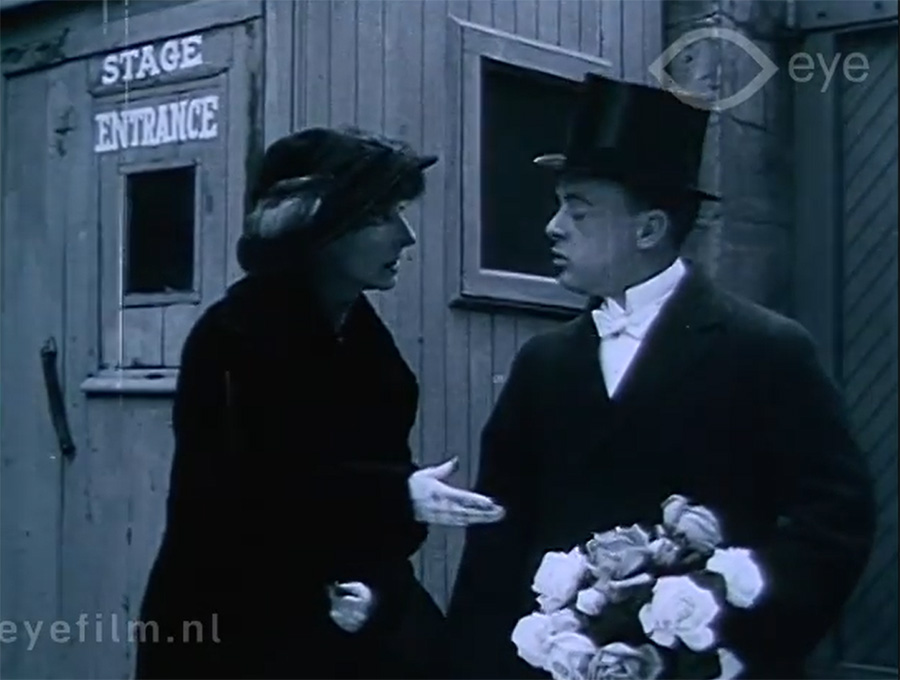
Cutey waits by the stage door with flowers for Dolly and Kitty but, again, Flora mistakes this gesture as admiration for her and excitedly tries to accept. Cutey ices her and Flora flees in tears. Dolly and Kitty show up and, in a lovely bit of slow burn comedy, once again wordlessly reject Cutey.
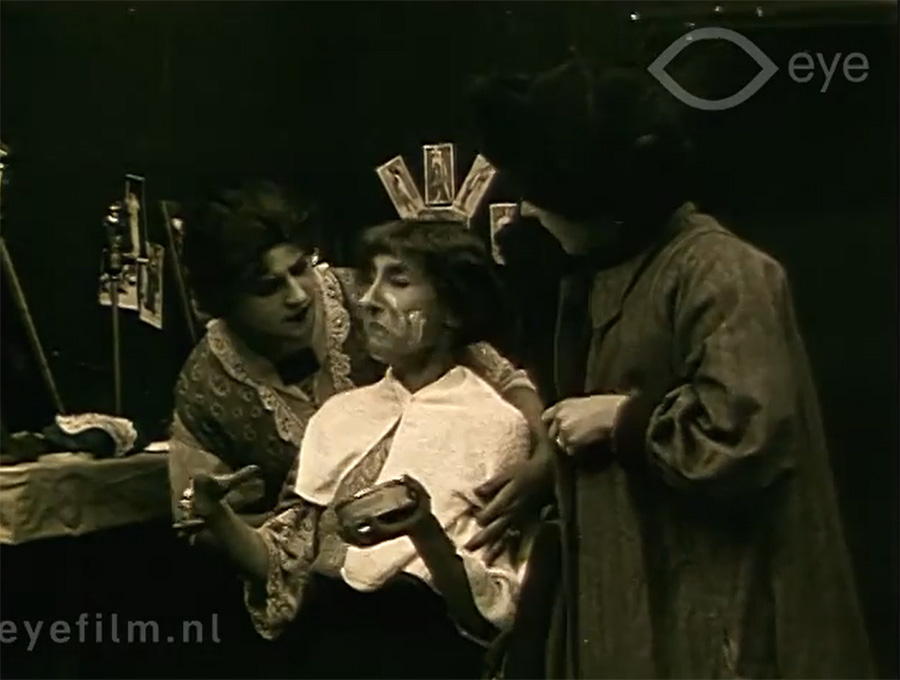
Inside the dressing room, they find poor Flora sobbing over Cutey’s rejection and comfort her, declaring that they don’t like him at all. Later, Hughie and Harry meet them outside, having paired off with Dolly and Kitty. They discuss Flora’s woes and Hughie and Harry promise to do something about it.
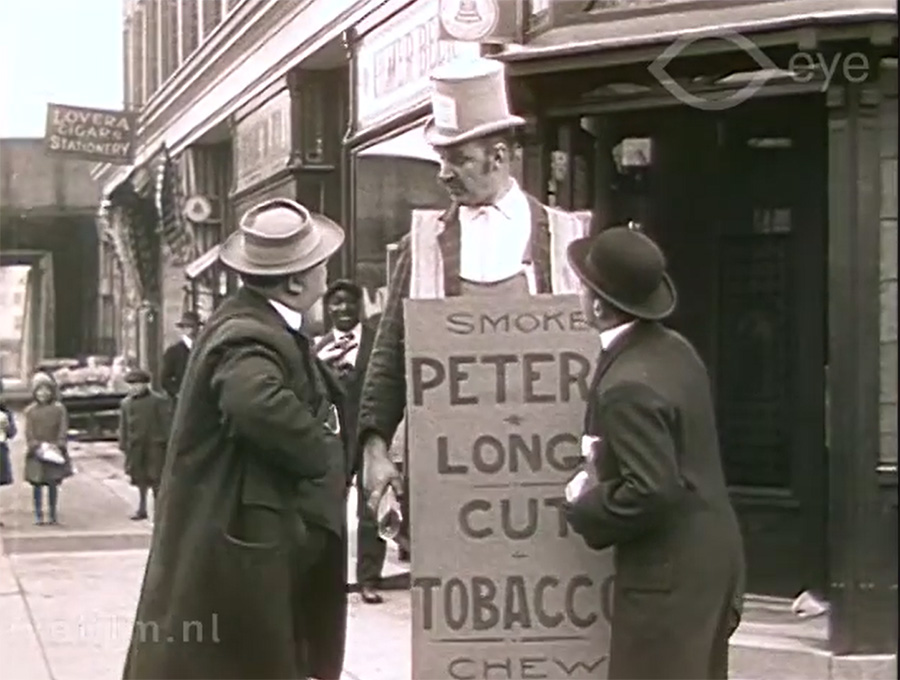
After leaving the theater, Hughie and Harry spot a sandwich man advertising “long cut tobacco” while wearing a sandwich board and handing out pamphlets. “Long cut” indeed because he is nearly seven feet tall. (The actor is not credited but trade magazines call him “the Vitagraph tall man” so let me know if you have a name.) Hughie and Harry offer him a generous sum of money to come work for them on a small project…
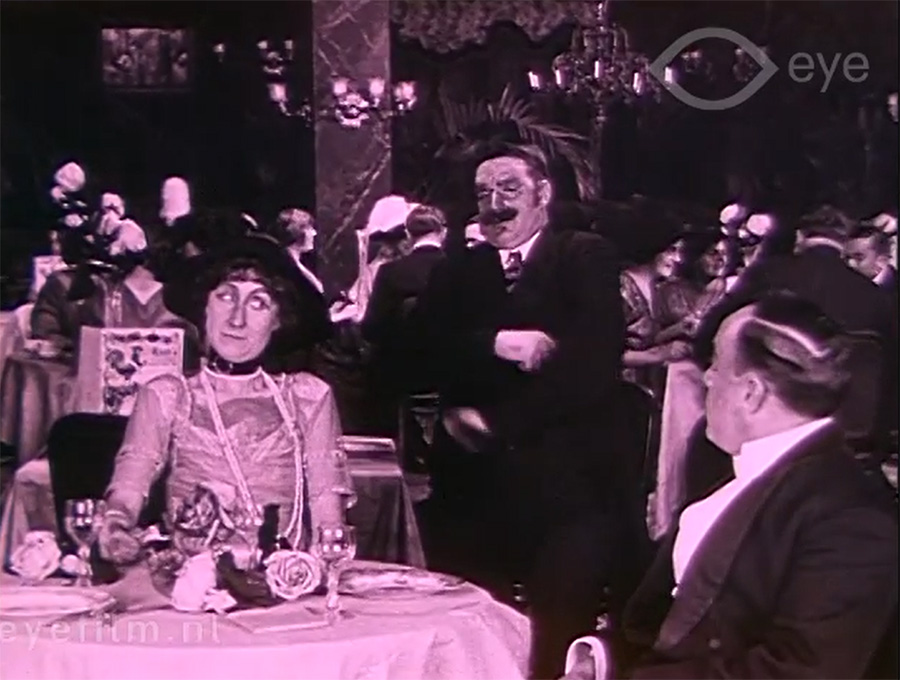
Cutey won’t take no for an answer and sends both a bouquet, a diamond ring and an invitation to dinner to Kitty. Kitty hands the items off to the delighted Flora because a plan is already in motion. Flora slips into the restaurant and is there waiting for Cutey. He throws a fuss but soon changes his tune when Flora’s “brother” (the sandwich man) shows up and berates him for breaking his poor sister’s heart.
Cutey is forced to complete his meal with Flora under the watchful eye of the sandwich man and is stuck with the bill for everyone’s meal in the end. Hughie and Harry depart with Dolly and Kitty, while Cutey is obliged to walk Flora home. Aw, nuts!
Cutey and the Chorus Girls was directed by James Young with a scenario by Beta Breuil, a top screenwriter for the Vitagraph company at the time. The cast and director particularly deserve praise for the way they handle the material. The slow burn looks the actors exchange have aged beautifully and Lillian Walker and Leah Baird are particularly to be praised for their roles as Flora’s defenders.
Trade magazines like The Moving Picture World would publish synopses furnished by the production company in addition to their own reviews. As is always the case with marketing vs. criticism, these synopses give us insight into how the film was being sold by its producers and how what they thought they were doing may not match with what ends up on the screen. For example, the description of Cutey and the Chorus Girls:
“Flora Scrawny mistakes Cutey’s efforts as being directed to her. He hastens around to the stage door with a bouquet of flowers, tries to present them to Kitty, and when she will not accept them, he offers them to Dolly. Flora appears and takes it for granted that he is waiting for her. Cutey tries to make her understand that she is not in it. He sends a diamond ring with a bouquet of flowers to Dolly. Flora is disappointed that he had not sent them to her. Dolly consoles Flora by telling her she does not care for Cutey.”
Reading the synopsis, it seems that the scenario was on Cutey’s side (note the “Flora Scrawny”) but the way it was performed puts sympathy squarely behind Flora. Dolly and Kitty adore Flora and don’t want her to be picked on, so they pull in Harry and Hughie to assist. The men were shown scoffing at Flora earlier in the picture, so their motives were not benevolent but Flora still enjoyed a win thanks to them.
A common bromide when discussing film is that we cannot look at old movies with modern eyes. I don’t agree because not only is that impossible, some films actually benefit from being examined with modern sensibilities. Cutey and the Chorus Girls is one of these pictures.
In the course of the film, Cutey is determined to try try again even though he has been unquestionably rejected twice and the women he fancies have paired off with his friends. Gender roles of the time dictate that Cutey is permitted to continue his charm offensive but Flora is being a pest when she continues to pine for him and, again, this was likely the intention of Vitagraph. The practical joke played by Cutey’s friends was that they saddled him with a dud.
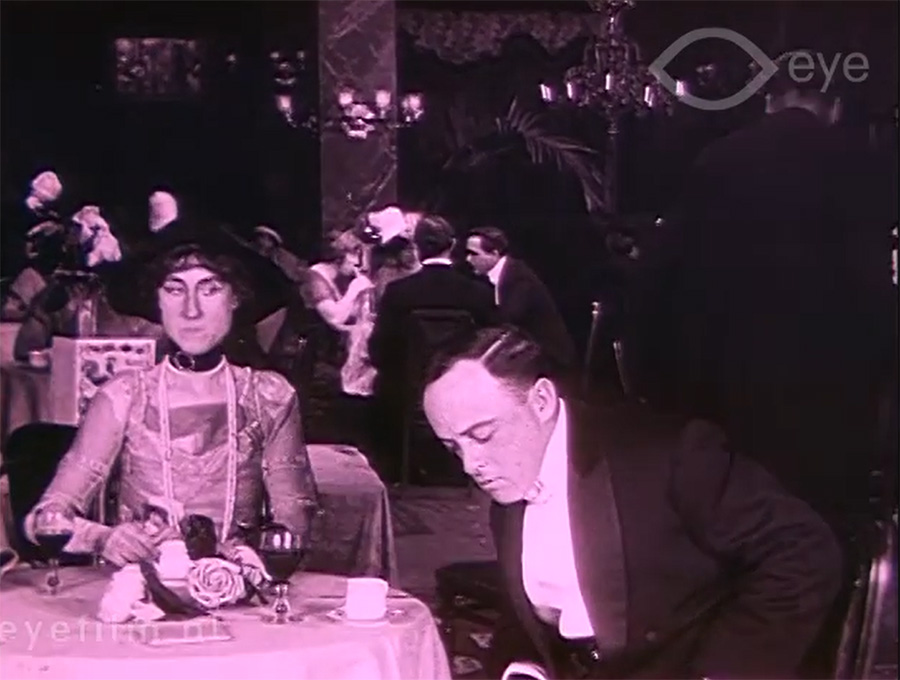
However, Flora Finch is too good an actress to be seen as a mere tool in a prank between chums. Her triumphant glee and glances of contempt at Mack as they share their awkward meal show that she is enjoying the joke as much as anyone and she has no illusions that she is now Wally’s beloved. She is watching the man who humiliated her squirm while eating a free meal at his expense.
Finch was frequently the butt of jokes at Vitagraph, even when her character had real grievances. This is particularly evident in the movies she made with John Bunny, which frequently ended with her disgraced and in tears. (Vitagraph comedies could have a real mean streak, all told.) However, Wally Mack lacks Bunny’s big screen personality and the balance of power shifts to Finch in this film.
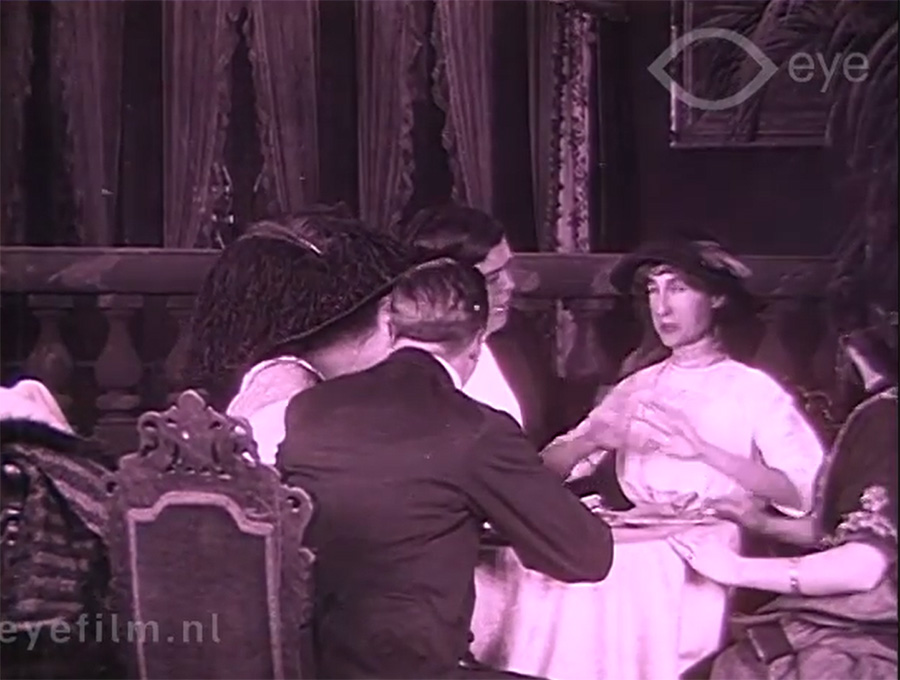
Further, the warm affection Walker and Baird show toward Finch is infectious and the audience feels protective of her by proxy. Finch’s character made an honest mistake and the scenario seems to be treating that as a sin in itself, this skinny older woman daring to think she could be attractive. Mack overreacted to Finch but seemed to think it was his right to keep after Walker and Baird. Well, we’ll just see about that!
Mack continued with the Cutey series for almost exactly two years, from summer of 1913 to summer of 1915. He pivoted into directing and kept his hand in acting but he never reached the same heights of fame as his Vitagraph comedy contemporaries. Apparently charming and dynamic in person, Mack comes off as more bratty than anything in this picture, though it does make me curious to see other films in the series as they seem to focus more on Cutey just trying to get parental approval to marry. Perhaps Mack was one of those comedians who needed a likable character to shine onscreen.
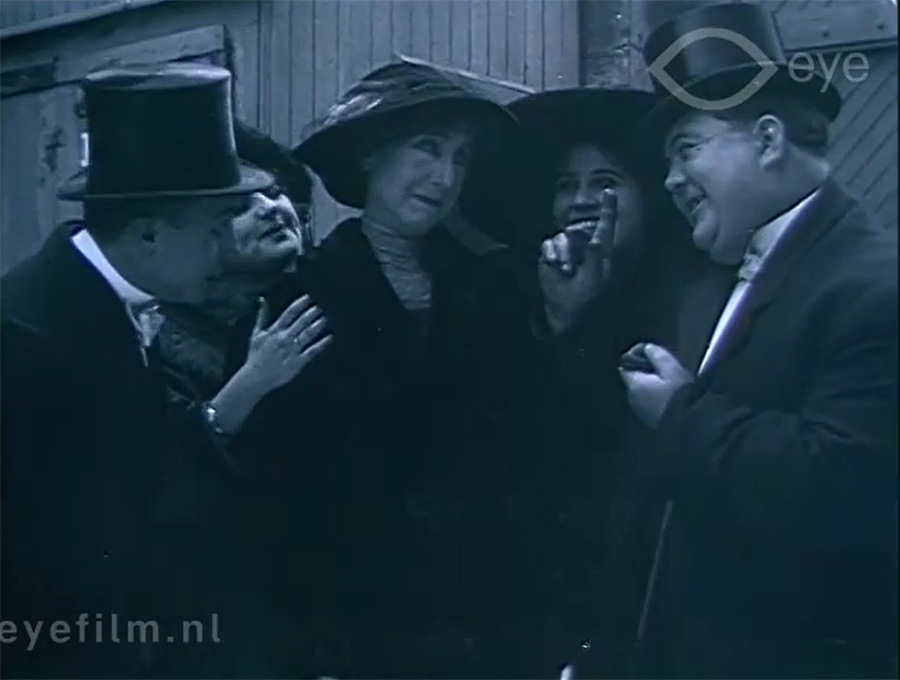
Still, this is a nice little vehicle for Finch, Baird and Walker, as well as the mysterious tall sandwich man, who also revels in his role as (well-paid) protector. It’s always fun to see the women of silent era comedy shine and this picture is a great example of that.
Where can I see it?
☙❦❧
Like what you’re reading? Please consider sponsoring me on Patreon. All patrons will get early previews of upcoming features, exclusive polls and other goodies.
Disclosure: Some links included in this post may be affiliate links to products sold by Amazon and as an Amazon Associate I earn from qualifying purchases.
 Movies Silently