
When a young servant is unjustly flogged by his employer, he snaps and sets out on a life of crime, robbing from the rich to give to the poor—while taking time to play practical jokes on the wealthy and powerful ruling class of Estonia.
Home Media Availability: Stream for free courtesy of Arkaader.
This Saucy Fellow
Every culture has its folk heroes and one of the most universally popular type is the charitable bandit who robs from the rich to give to the poor. Hundreds of these rogues are celebrated in ballads, stories and films worldwide and Jüri Rumm is a film that portrays Estonia’s own version.

Jüri Rumm was a real person, a peasant who threatened to rob all the manors in Estonia, gave to the poor, performed exciting escapes and was eventually exiled to Siberia. With his 1856 date of birth, many of his contemporaries would have still been alive when the movie based on his exploits was released.
The film opens with a harvest scene but the bucolic imagery of grain and sickles soon turns dark as an overseer throws water on an overworked woman who cannot stand. Low camera angles emphasize this menace.
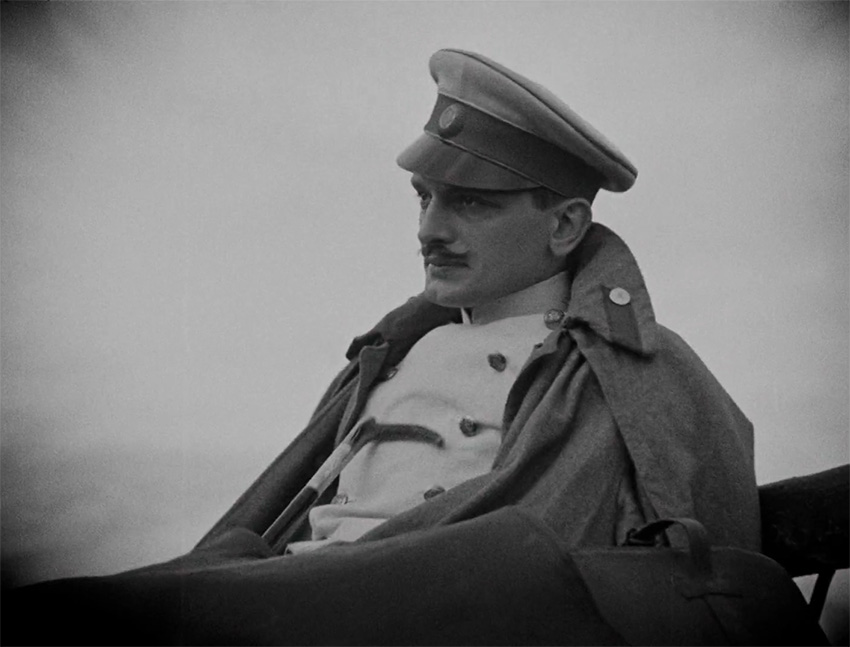
Meanwhile, the estate’s manor has a guest: a military officer has come to visit his uncle, the baron (Boris Borissoff). The staff gathers to greet the guest, including Madli (Ly Kerge), the maid. The old butler struggles with the nephew’s suitcase and the baron demands to know where Jüri Rumm (Helmuth Suursööt) the servant is.
Jüri is visiting his sick father. The old man needs nourishing food but all his has is dry bread. Jüri thinks to the rich meals enjoyed by his employer and promises his father that he will bring him better food.

Back at the manor, he baron lectures Jüri for leaving his post and then has him serve lunch. Jüri watches the baron and his nephew eat luxuriously and he cannot stand it anymore. He tries to steal a bottle of wine and good bread for his father from the baron’s larder but is caught and the baron flogs him personally.
Madli is in love with Jüri and comforts him. He vows that he will have his revenge. After packing his few belongings, Jüri steals into the baron’s study and takes a pistol from the desk. He then adds a flourish, a neatly written thank you note. This kid was born to be a rogue! (The Baltic states prided themselves on their high literacy, so a peasant with a Palmer hand was not an inaccuracy.)

We have seen for ourselves that Jüri is a strapping and brave young fellow but now we are shown that he possesses the final and most important ingredient for a heroic bandit: cheek. It’s all very well striking out against injustice but to succeed in this genre, the protagonist must also be insolent.
Jüri steals the baron’s best horse and rides away but he is pursued by the baron and his nephew, as well as other members of their staff. They shoot and wound Jüri and lock him away in a shed while they send for the magistrate. Jüri finds an iron rod in the shed and starts to pry the bars from the window.

Meanwhile, the nephew returns to the manor and asks Madli to bring him wine. When she delivers it to his room, he locks to door and tries to rape her. Suddenly, Jüri appears and holds the nephew at gunpoint. He warns him not to hurt Madli again and, just as the baron breaks down the door, slips out the window while Madli flees to safety. Jüri steals another horse and this time gets clean away.
As was common with adventure stories of this era, Jüri Rumm is episodic. After he escapes the manor, he launches onto a reign of terror against the local nobility, both robbing them and playing practical jokes—he even has calling cards printed up to leave with his victims. The picture ends somewhat abruptly and ambiguously and I wonder if it had actually been meant to go on longer. (There is also a certain amount of ambiguity about who wrote the film’s scenario.)
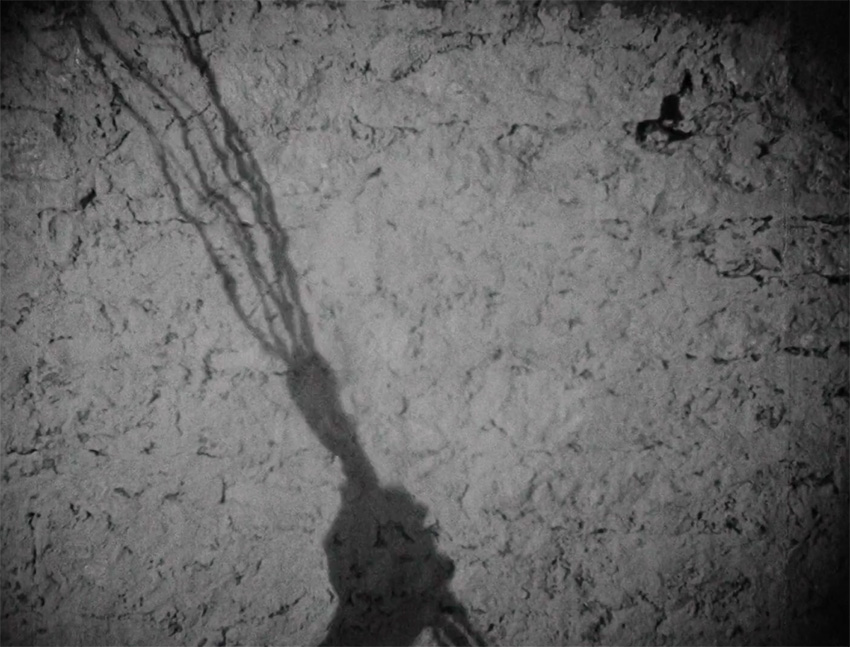
Unfortunately, the fourth reel of the film is missing and nothing survives that would tell us precisely about its contents. The film is based on the novel of the same name by Hans Varessoo but it does not seem to be available in English. However, there are a few clues. Jüri has gathered a gang when the film picks up in reel five, so reel four may have been about assembling the team. We also see a magistrate fooled by a straw dummy in a later flashback, so that was likely part of the missing reel.
I quite liked Helmuth Suursööt in the title role. He is suitably athletic for the role, of course, but I also enjoyed his transformation from his status as a servant, glowering and wearing his livery as if it were a straitjacket, to a merry bandit who is as committed to pranks as he is to actual theft.
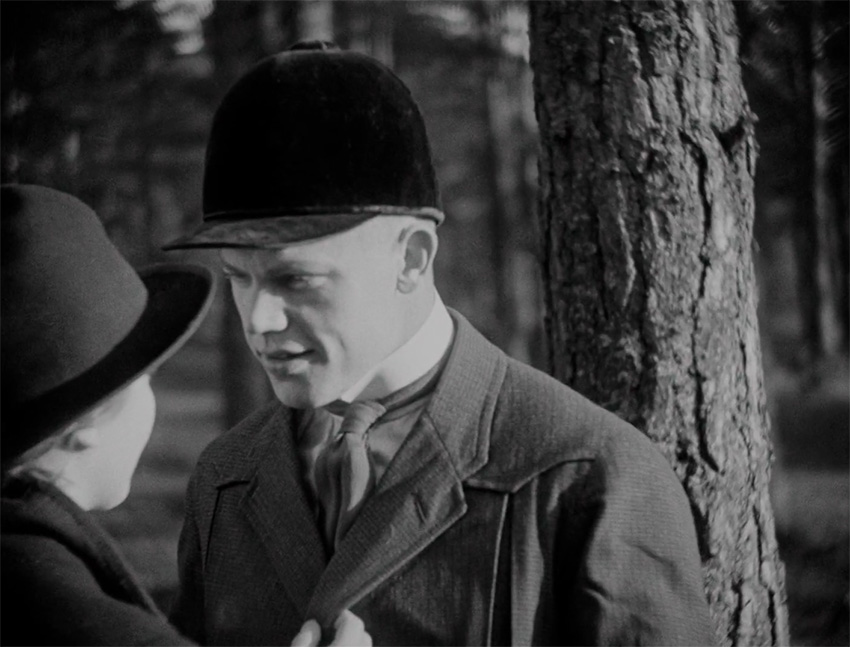
The film went through three directors during its production, John Loop, Boris Borissoff, and Mihhail Lepper all took a turn at the job. It might be appropriate, then, to credit cinematographer Konstantin Märska with the film’s unique look and mood. The picture makes liberal use of tracking shots, handheld or horse-mounted cameras and high and low angles to emphasize social hierarchy.
The picture also takes on a voyeuristic atmosphere as tracking shots take us toward widows and doors, as though we are peeking back in time, and several high angle shots male us feel like peeping toms. There is also a nice point of view shot as the villains fire on Jüri from horseback. The film’s editing is somewhat untidy with actions repeating between cuts but I am not sure how much of this was due to the film being recut in the 1930s. All in all, though, it is a handsome picture that takes advantage of both its local scenery and the equestrian skills of its cast.

“The Robin Hood of [insert country]” is common shorthand but Robin Hood is actually an outlier among the Jüri Rumms, Jánošíks, and Schinderhanneses. The original Robin Hood ballads painted him as a commoner, not necessarily a peasant but absolutely not of the ruling class and certainly not a particular friend of the king. This, of course, introduces the type of interclass tension that we see openly displayed in Jüri Rumm.
Robin Hood’s status was rapidly inflated, and he was a full earl by the Elizabethan era, though most adaptations are satisfied to create him a knight these days. Rather than being a common man fighting for his peers, he was now “one of the good ones,” a benevolent aristocrat who was loyal to the right sort of monarch. A well-behaved feudal citizen, in short. And this leads to all sorts of narrative headaches as adapters are now saddled with the Crusades and the pickle of King Richard, who is usually portrayed as heroic but whose bloodlust was nationally bankrupting in real life.
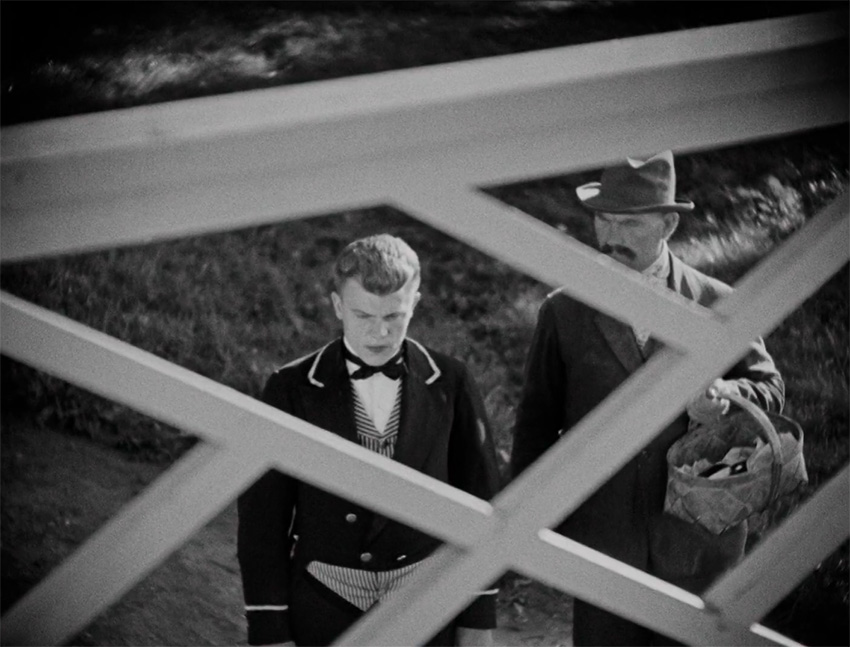
Jüri, on the other hand, has seen the aristocracy from the inside and has no use for it. His wants were always simple: a nice romance with Matli, good food and medicine for his ailing father, personal dignity. Robin Hood is often motivated by the loss of his lands while he was away fighting the Crusades. Jüri had no lands to begin with and wants little but the aristocrats can’t even let him have that.
The fact that Estonia was a colonial holding of the Russian Empire and was about to be subjected to a campaign of russification when Jüri Rumm began his criminal undertaking adds another layer to the class commentary. At the time the film was made, Estonia was enjoying its interwar independence but its past as a vassal state was recent history and it would find itself annexed by Soviet Union in the aftermath of WWII.

So, the nasty nephew is an officer in the Russian military, which would have been significant to audiences in 1929. (In contrast, Robin Hood adaptations sometimes attempt class commentary with an anachronistic Norman overlords vs the Saxon commoners social conflict but this is merely window dressing as all heroes, Norman or Saxon, agree Richard is a splendid king.)
Jüri’s close physical proximity to the aristocracy, local politicians and military officers as a servant gives him a powerful tool to use against them. He has lived among them, his life and safety has relied on understanding their every gesture. This means that he is able to mimic them and use the class system to his advantage, posing as an officer and barking out orders or as an aristocrat and insinuating himself into their inner circles. Since the aristocrats view the peasants as unimportant, unworthy of study, and (in context) foreign, they do not enjoy a similar advantage.

Jüri’s success as a bandit relies on his ingenuity, his skill with disguises and the fact that his upper-class foes are complete idiots. You might want to argue that this is a flaw but, well, have you read of the antics of ancestral nobility? Portraying the baron and his allies as not having two brain cells to rub together seems quite historically accurate.
Seriously, though, the villains’ biggest weakness is the very class system that benefits them. Jüri is able to deceive, steal and escape because he understands that if he issues demands with confidence and while wearing the right clothing, many people will obey without question. And order he does, telling a soldier to wear a dress, telling a magistrate that he is an important official, convincing manor guards that he is an out-of-town aristocratic visitor…

A bandit adventure story should leave the audience saying, “Well, that was fun!” and Jüri Rumm succeeds. I imagine audiences were cheering with every successful scheme and escape and the excitement is still present almost a century after the picture was made. For all of its social commentary, the film never loses sight of its goal to entertain and that’s no easy feat. Don’t sleep on this one!
Where can I see it?
Available for free streaming courtesy of Estonia’s official archive. It is a 4K restoration of original materials with optional English subtitles and a fine, atmospheric piano and percussion score by Stephen Horne and Frank Bockius. I wish every country showed this much generosity, dedication and good taste in presenting their silent films.
☙❦❧
Like what you’re reading? Please consider sponsoring me on Patreon. All patrons will get early previews of upcoming features, exclusive polls and other goodies.
Disclosure: Some links included in this post may be affiliate links to products sold by Amazon and as an Amazon Associate I earn from qualifying purchases.
 Movies Silently
I’m so glad that I watched this film. My first Estonian film, so I shall check out the other films on Arkaader. It was great to see that there was an English translation. My only disappointment was the ending which took me a bit by surprise. Nevertheless, I really enjoyed it. Many thanks for your excellent review.
Glad you liked it! The picture was privately funded, so my personal theory is that the money ran out. A shame, though, the real man apparently escaped his capture by scaling the battlements of Tallinn and I so wanted to see that!