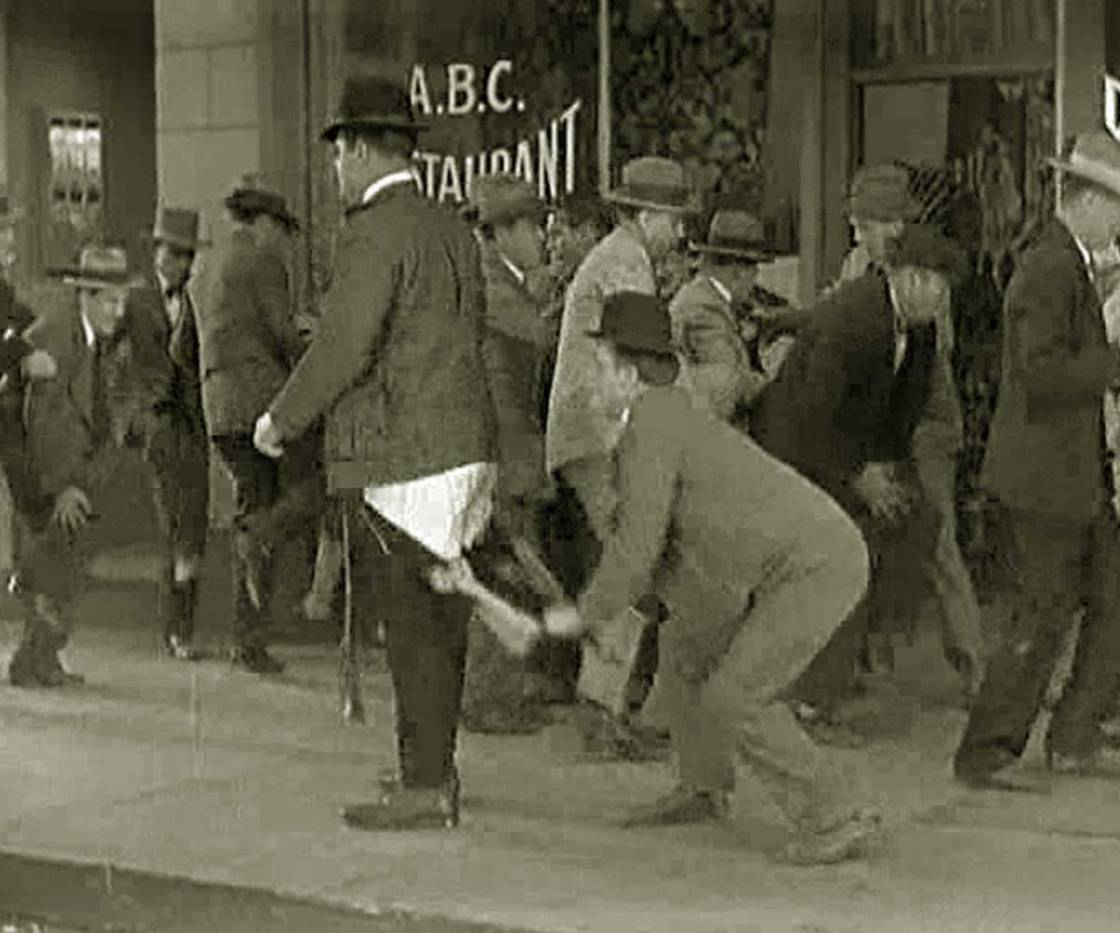
Musicians Stan Laurel and Oliver Hardy’s antics at a band concert end in their employment being terminated and they must turn to busking to make ends meet. However, playing on street corners proves to be more perilous than they had imagined.
Home Media Availability: Released on Bluray.
Flat Horn
Stan Laurel and Oliver Hardy had first been properly teamed in 1927 and it had been a year of experimentation as their comedy personas began to develop into the screen magic we all know today. They closed out the year with The Battle of the Century, which featured a legendary pie fight.
How could the newly-minted team top that? Why, with a legendary pants fight, of course.
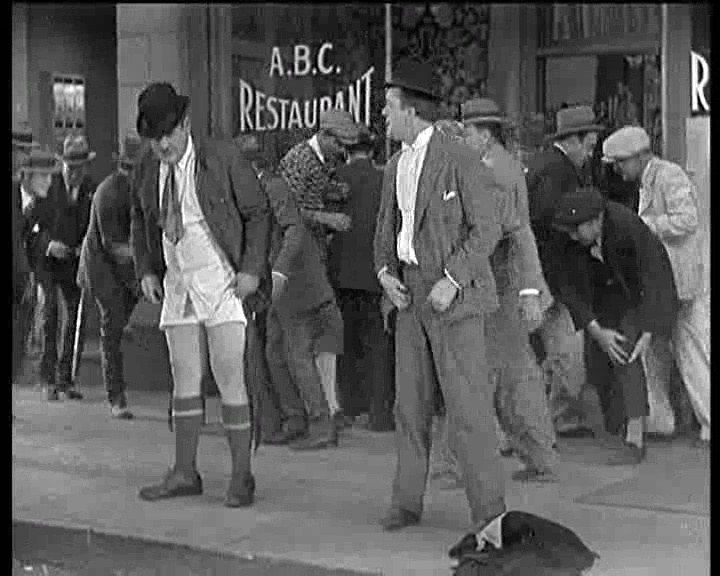
You’re Darn Tootin’ was the fifth Laurel and Hardy release of 1928 and it opens with familiar territory: the Boys in hot water at their workplace.
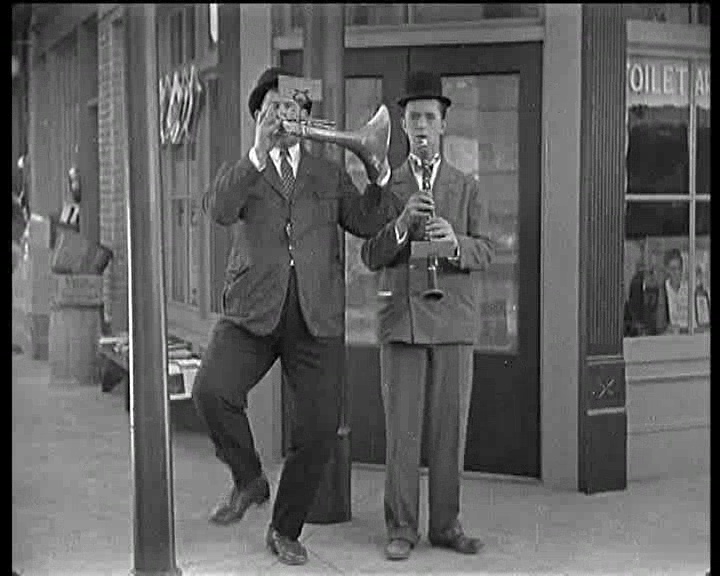
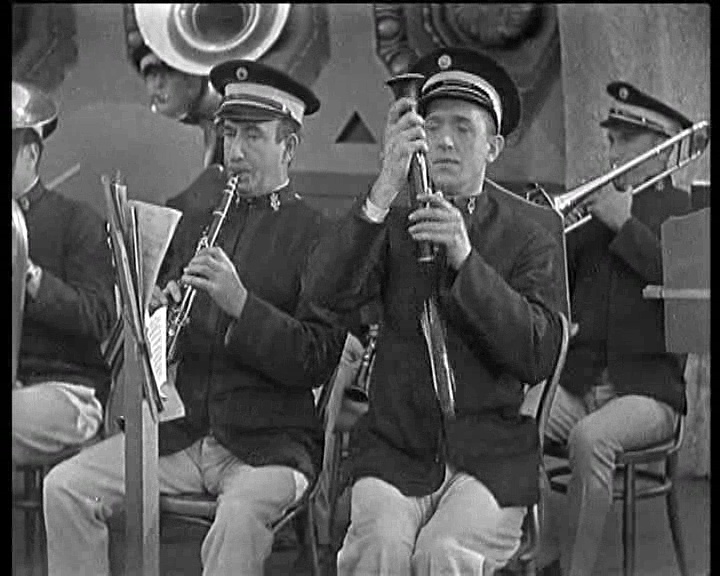
Stan and Ollie play clarinet and horn in a band and are busily tooting away at a concert under the baton of Otto Lederer. The Boys mess up their cues and generally spread musical chaos (the sequence is surely a silent film accompanist’s dream—what a fun scoring opportunity!) which is capped off by Stan losing his sheet music. Fired from the band, the pair attempt to go independent by busking.
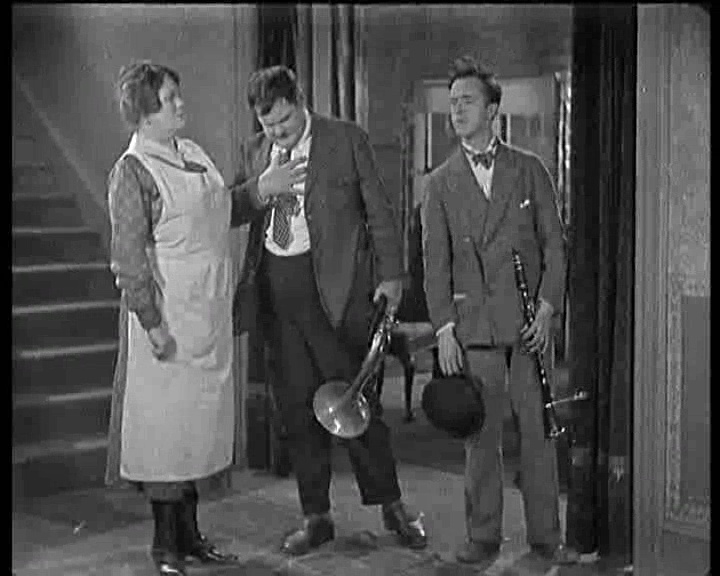
Back at their boarding house, fourteen weeks of back rent is due and the landlady (Agnes Steele) tries to be discrete with a reminder note. The whole thing falls apart when her kid shares the news about Stan and Ollie’s band antics, as well as their loss of employment.
With no more tricks up their sleeves, the Boys must vacate the boarding house. Ollie dramatically declares, “Very well, Sister McPherson, we go.” Megachurch founder and mass media preaching pioneer Aimee Semple McPherson is mostly remembered today for her 1926 disappearance and the subsequent media circus that erupted upon her return, but this gag was likely referring to then-current pop culture ribbing of her constant requests for donations.
The same year You’re Darn Tootin’ was released, Variety published an anecdote of McPherson sweetly asking a young musician for an encore on her worship radio broadcast—followed by the hot mic picking up her not-so-sweet admonition to keep it short. “Must have been near collection time,” mused the item’s author.
The Boys return to busking and this is where the picture’s legendary pants fight begins.
Stan and Ollie bicker, Ollie slaps Stan’s clarinet out of his hands, Stan kick’s Ollie’s horn into the street, where it is run over by a steamroller and flattened. Of course you know, this means war. The pair move onto punching and kicking, and then things take a turn for the absurd.
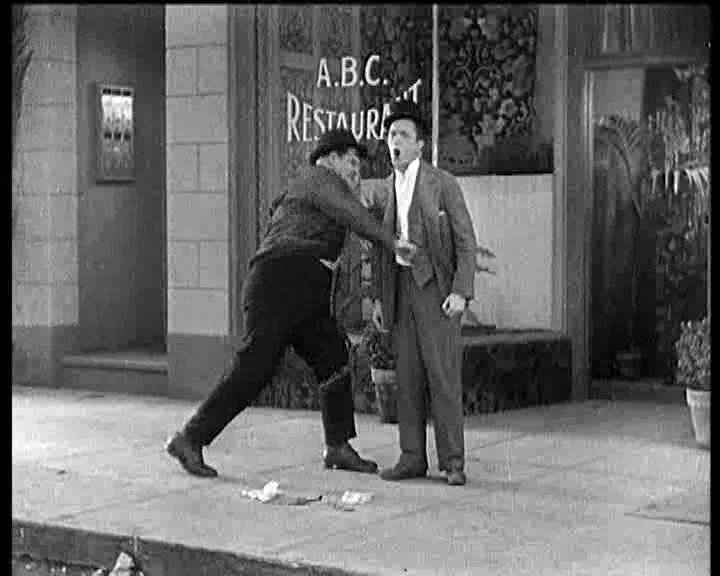
This sequence is hilarious and it’s always a risk to over-analyze comedy but I think it’s worth pointing out that it illustrates Stan Laurel’s strengths as a gagman. (With appropriate kudos to director and Hal Roach regular Edgar Kennedy.) Slapstick frequently descends into chaos and bizarre battles but Laurel was a master of somehow clearly conveying the bonkers logic behind the behavior to his audience. In other words, it’s weird reasoning but it’s reasoning that we understand all the same.
The pants battle starts as a basic brawl with the violence between two participants quickly spreading as bystanders are themselves injured and want to get a bit of revenge. (Which, come to think of it, is probably the best possible metaphor for the First World War.) When Ollie finally copies Stan’s go-to shin-kicking attack, Stan is horrified that such a thing could happen to him and escalates by pulling off Ollie’s pants.
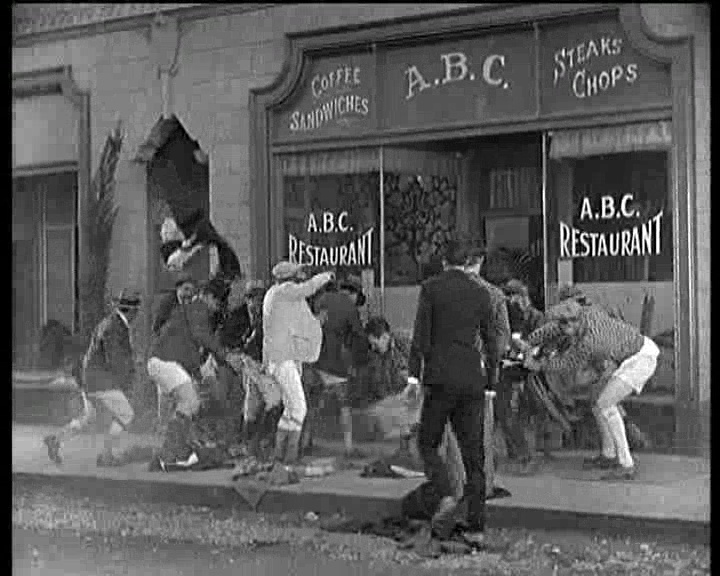
The pants tearing quickly spreads through the crowd of combatants but there’s only one pair of pants to the customer, so pants tearing is one and done. The pantsless men then take to attacking innocent passersby and removing their pants because, well, if it happened to them it should happen to everyone. Crabs in a bucket, as the kids on the internet say.
However, all of this would have been useless if the scene had not been timed and choreographed so well. Both the Boys and their supporting cast kick, punch and pants thei way through the sequence with impeccable timing—I completely lose it every time I see the trousers sailing through the air.
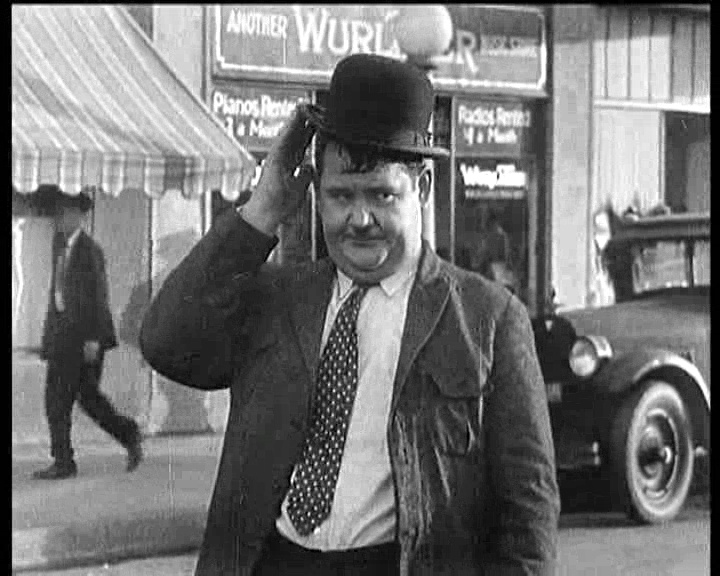
While Laurel was the behind-the-scenes man of the duo, Olive Hardy’s contribution was to add whimsy. Laurel’s solo work could head into dark and, at times, cruel comedic territory and that’s fine but adding in Hardy’s fluttering mannerisms, empty blustering and American optimism proved to be the secret ingredient. Look at the way he tilts his hat when he has finally lost his temper at Stan. It’s the perfect prelude to the mad fight about to begin.
Short comedies were not covered as extensively as features but You’re Darn Tootin’ was generally well-received. “Laughed myself sick… We featured this comedy,” declared a theater in Portland, Oregan. Generally, feature-length films, as the name implies, were the top of a theater’s marquee but You’re Darn Tootin’ was so good that it was considered a bigger draw than even fancy MGM pictures. That says something. Other theater feedback was equally effusive, declaring Laurel and Hardy comedy kings and surefire box office.
I did find one exception. McMinnville, Oregan’s feedback was “Good, except finish, which took off good flavor.” (McMinnville is known for a UFO sighting and I am starting to wonder if it was just this theater owner heading back to his home planet.)
Oh well, you can’t win them all but you can win most and You’re Darn Tootin’ (or, more specifically, the pants fight) was popular on the home viewing and comedy compilation market. In fact, one of those compilations is how I first encountered it. Spoiler: I laughed so hard that I lost the ability to breathe.
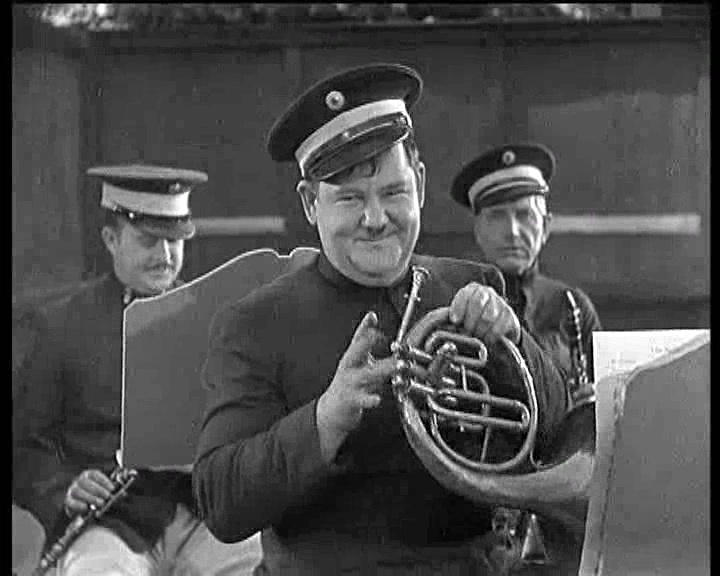
The first two-thirds of the picture are quite good in the classic Laurel and Hardy lovable loser tradition and are enjoyable for any fans of silent comedy but it is that final sequence that sends the picture into the stratosphere. Still, I am glad that I was able to see the entire picture after many years of only seeing the finale.
You’re Darn Tootin’ is one of my favorite Laurel and Hardy silents. It showcases the Boys at the height of their powers, their characters fully established and it also showcases Stan Laurel’s talents as a comedy writer. It’s a treasure, don’t miss it.
Where can I see it?
Low quality versions can be found online but a restored version in HD for the first time will be part of Flicker Alley’s upcoming Laurel and Hardy: Year Two collection, scheduled for release October 29, 2024. (Review screencaps taken from older home media release, not the new restoration.)
☙❦❧
Like what you’re reading? Please consider sponsoring me on Patreon. All patrons will get early previews of upcoming features, exclusive polls and other goodies.
Disclosure: Some links included in this post may be affiliate links to products sold by Amazon and as an Amazon Associate I earn from qualifying purchases.
 Movies Silently
Accompanying this movie raises some hard questions. With a full orchestra it might be possible to imitate what’s being played on the screen, but even if it’s possible I don’t necessarily think it’s the right way to go. The French horn is a murderously difficult instrument, and trying to replicate horn-clarinet duets with mediocre players wouldn’t work that well. In any case, the orchestra scene calls on the accompaniment, whether a soloist or an orchestra, to make lots of use of silence.
Yes, I think a more playful interpretation rather than slavishly following the music as portrayed onscreen is the way to go here.