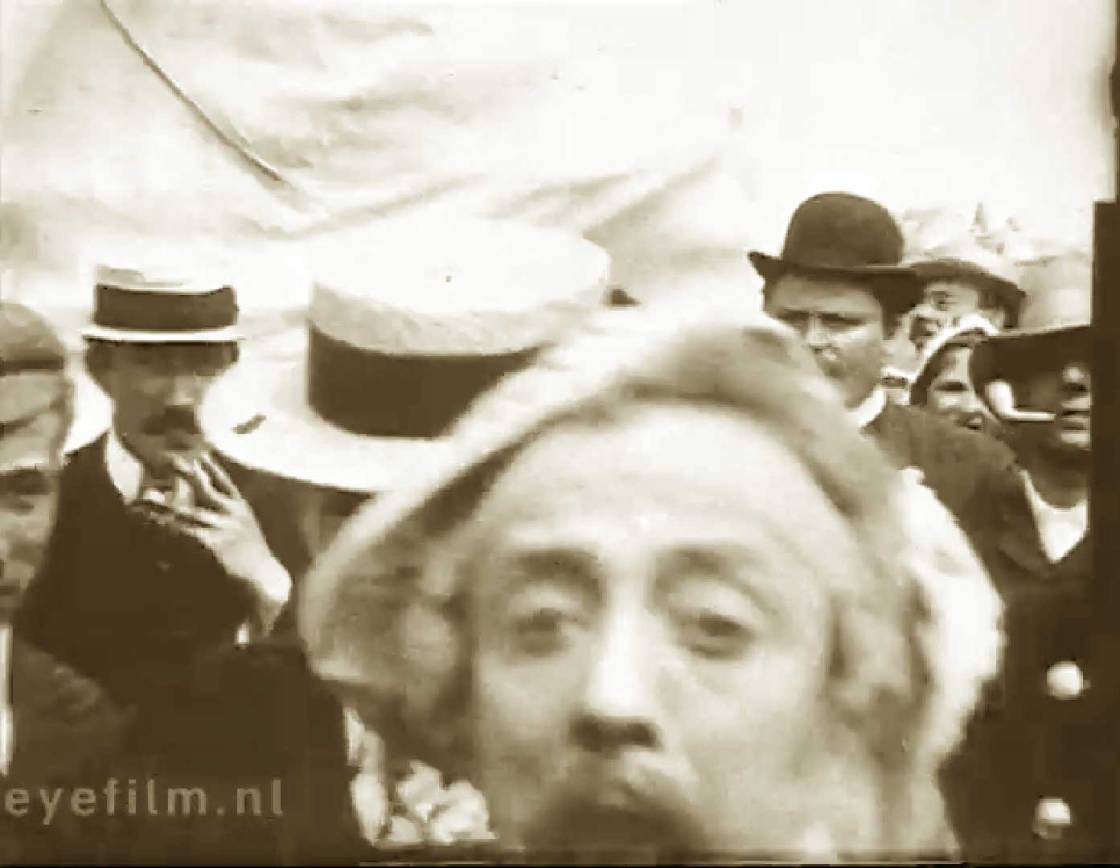
An accurate movie title if there ever was one: a French tourist quickly finds himself in trouble when he doffs his trousers at the beach. Chaos ensues as the townspeople gather to witness this shocking spectacle.
Home Media Availability: Stream courtesy of EYE.
Pants Problem
Willy and Bernard Mullens were young and ambitious and they meant to get ahead in the still relatively new motion picture industry. Dedicated motion picture theaters were just a few years old and the brothers made their career in itinerant picture shows and filming actuality footage in the Netherlands.
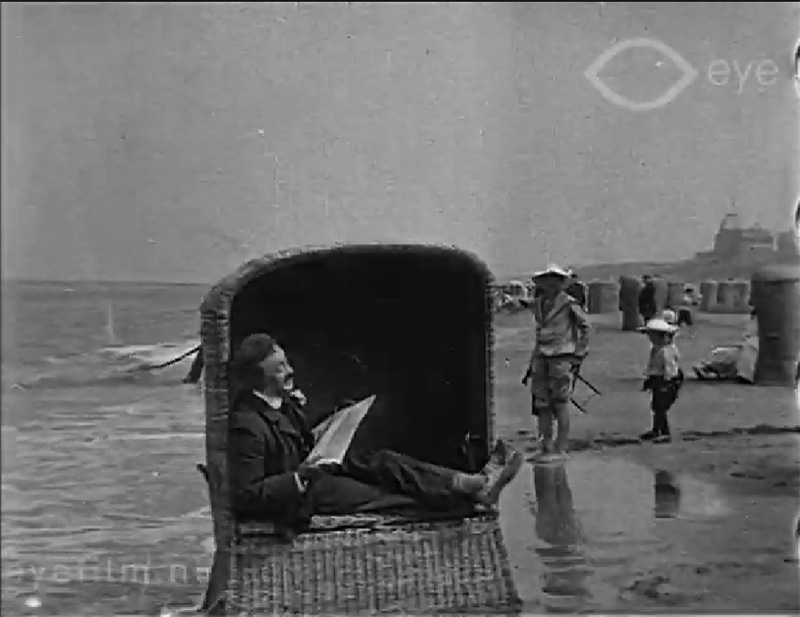
A trip to picturesque Zandvoort Beach in the summer of 1905 led to the production of The Misadventure of a Frenchman Without Pants on Zandvoort Beach. Willy played the title role, Bernard operated the camera and the entire town of Zandvoort turned out to act as the supporting cast.
Willy’s character is shown relaxing in a shady beach chair. He is dressed in a full suit—beachwear ranges from linen trousers and cotton dresses all the way to normal daywear—and does not notice when the tide comes in. He cannot allow his trousers to be spoiled by the water, so he naturally takes them off.
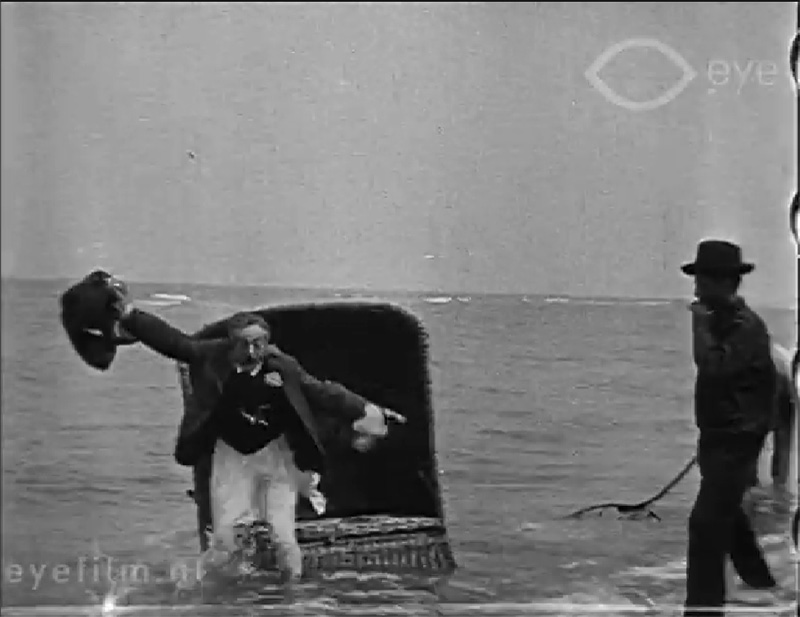
(The French tourist’s intense desire to keep dry may seem odd to modern viewers. Western middle-class clothing at the time was divided into components and layers that were laundered at different intervals. Underwear could be changed as often as needed, collars and cuffs detached from shirts and were cleanable/disposable, shirts were washed and starched but would not be ruined by saltwater, suits and dresses often required professional cleaning that was both pricy and flammable. Thus, our French gentleman’s understandable motivation to doff his pants.)
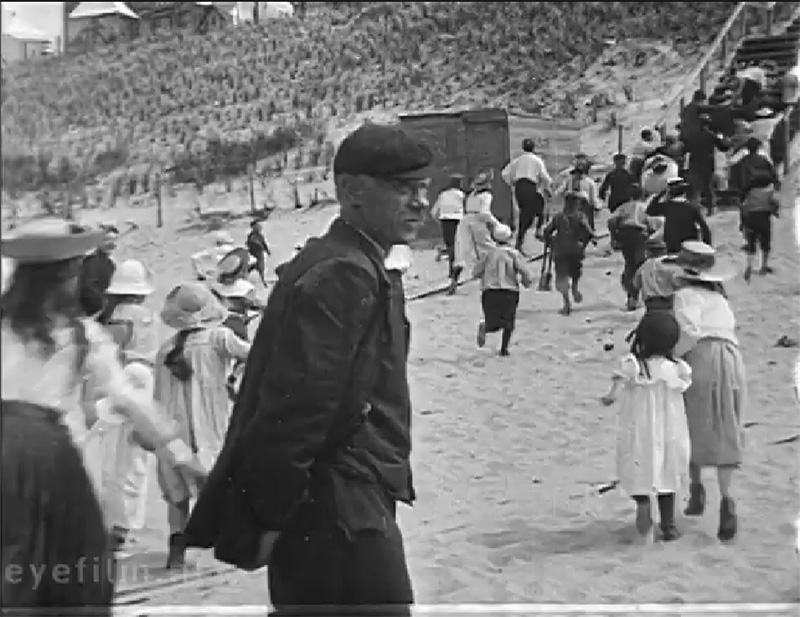
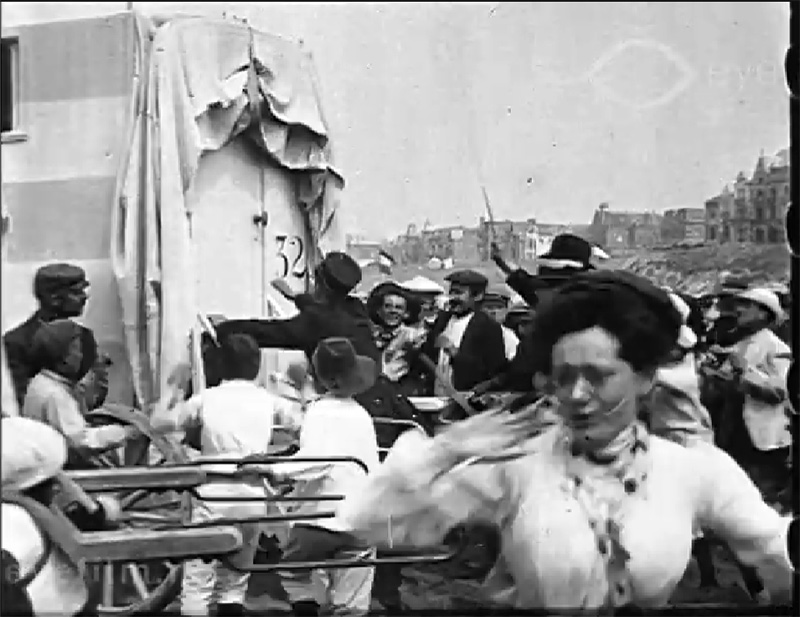
The rest of the film involves Willy attempting to escape, hide and find something to wear on his lower half as his trousers go missing in the chaos. The local police and beachgoers pursue him all over town and back to the beach, where he barges into a dressing room and is carted off by the police. A vacation well and truly ruined.
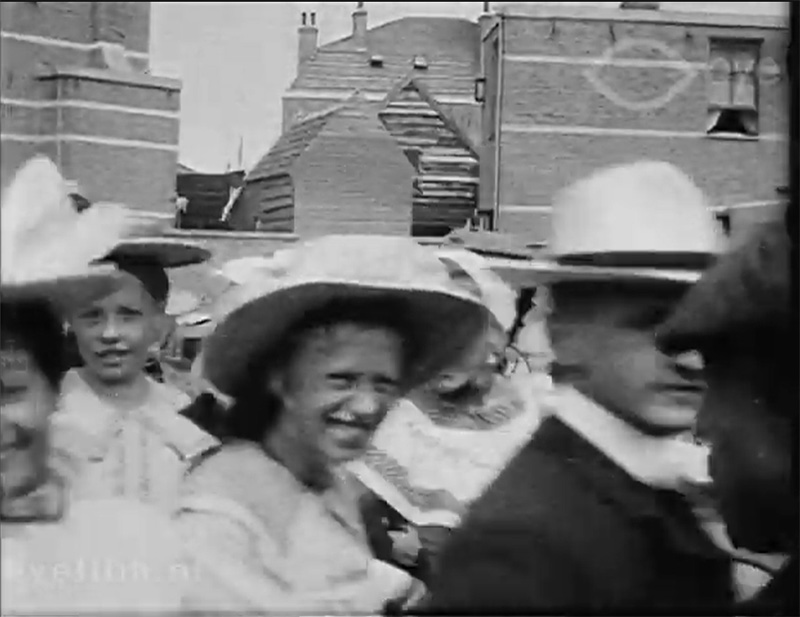
A simple plot, to be sure, but the loss of pants and subsequent attempts to recover them is a comedy classic for a reason (multiple pants comedies were released throughout the 1900 and beyond) and the film’s brief five-minute runtime means that the joke doesn’t become stale. The Mullens brothers take advantage of the local facilities with mobile dressing rooms, shops and automobiles pressed into service.
The Mullens brothers were engaging in several popular cinematic innovations: itinerant filmmaking, the blending of actualities and fiction, and multi-scene chase films.
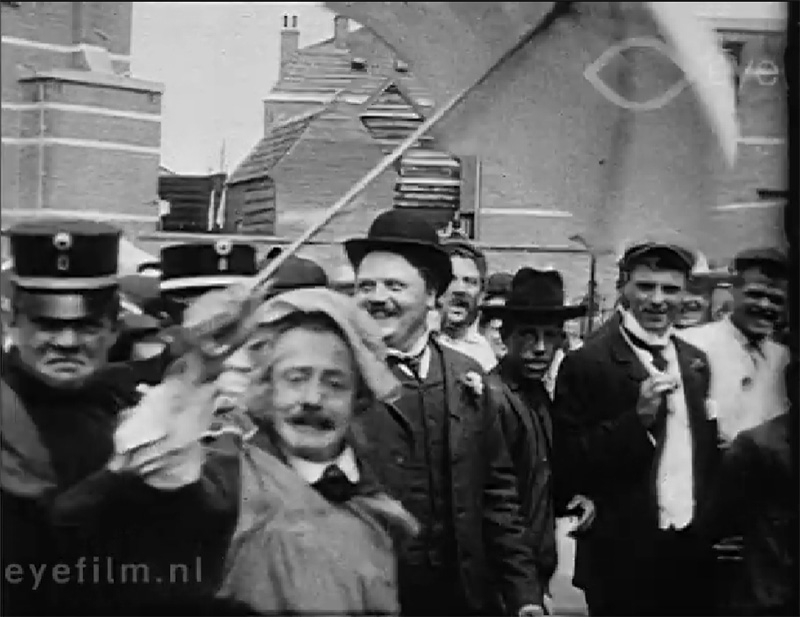
Itinerant filmmaking went hand in hand with itinerant screenings. Basically, filmmakers would have a simple scenario prepared and allowed the locals to act it out before the camera. They would then screen the picture and the stars, their friends and families would happily pay admission to see the premiere.
The appeal of itinerant filmmaking at the time was allowing the locals to play film star for an afternoon and subsequently see themselves on the screen. It was meant to be an ephemeral gimmick but, of course, the historical value of amateur local performers interacting with their everyday setting is enormous today and itinerant films are now just as interesting as polished studio releases of the time.
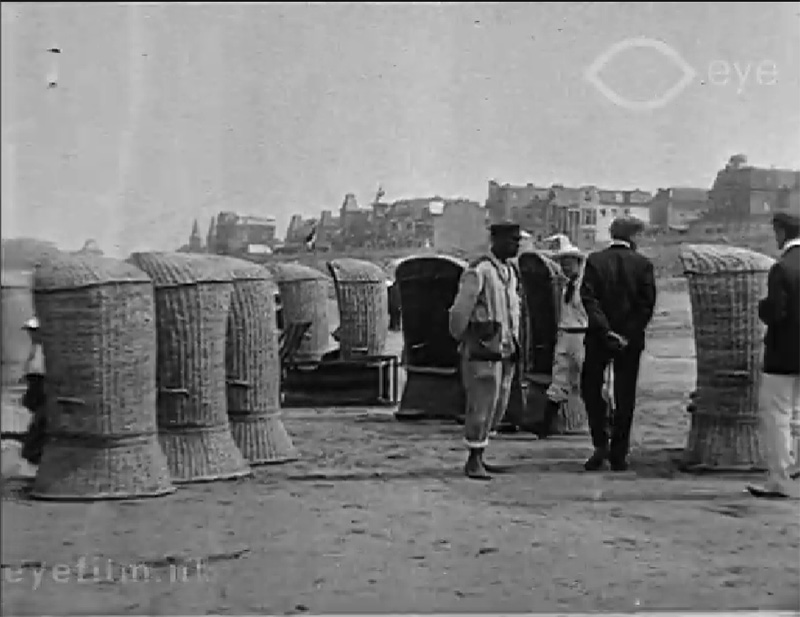
Itinerant screenings were also closely allied with actualities. Actualities were among the first kinds of films to be made. They were non-fiction but lacked the narrative structure of a documentary. Their goal was to show the audience something real as a reasonably neutral observer. Actualities famously covered exotic locations with camera teams fanning out across the world, supporting themselves with screenings of films they had packed along.
Actualities also captured more mundane, day to day activities, such as Lumière’s early hit Feeding the Baby. Phantom rides, or cameras fixed to a train or other means of transport, were another popular actuality type and the earliest moving camera before the days of zoom lenses and handheld equipment.
Combining actualities with fictional elements was a popular way to play with audience expectations. George Albert Smith’s A Kiss in the Tunnel (1899) starts as a phantom ride before cutting to the interior of a railway car and showing a canoodling couple (Smith and his wife, Laura Bayley). Edison’s What Happened on Twenty-Third Street, New York City (1901) seems to be a standard street scene—until a blast of air through a grating gives everyone an impromptu peepshow.
Naughtiness is a common theme of both these examples and the baton was picked up by the Mullens, who were likely also aware of the popularity to slapstick comedy and the pants-based gags that were leaving audiences in stitches. And, thanks to a mostly amateur cast, The Misadventure of a Frenchman avoids the mugging that could spoil a good gag.
Later filmmakers, notably Mack Sennett, would take advantage of local events of interest, from expositions to drained lakes to soap box races, as cheap and interesting backdrop for their films. These earlier actuality hybrids of the 1890s and 1900s are different in that there is an element of a fakeout about them; they seem to be normal actualities and then everything goes wild.
Interestingly, the EYE Filmmuseum points out that news coverage in Zandvoort discussed the pantsless gentleman as a real event without mentioning the movie camera. This may have been due to it being a slow news time but it’s also possible that the misinformation was a marketing tactic by the Mullens. Movie hoopla was big business and publicity stunts were already popular ways of marketing cinema.
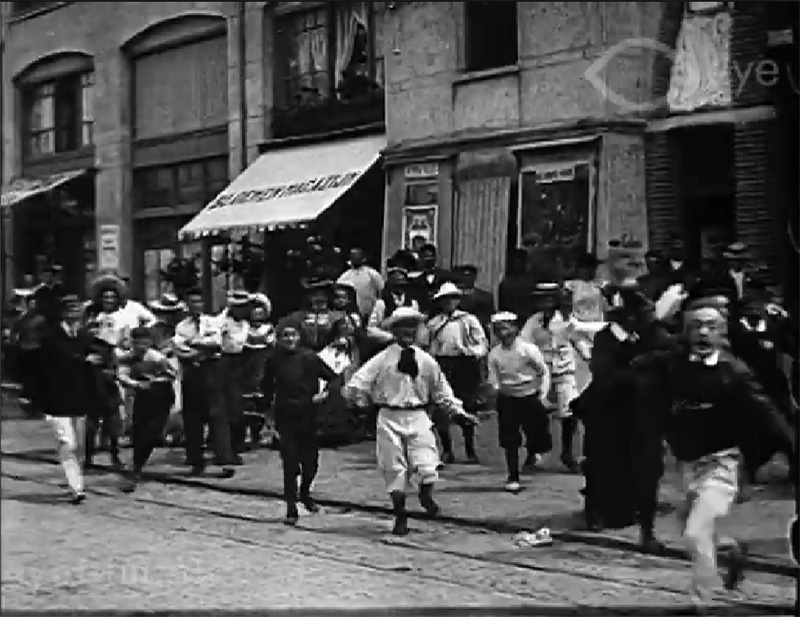
Whatever the truth of the newspapers, the picture is also noteworthy on a technical level. Edited closeups had been in the mix since 1901 and single-shot closeup films (such as The May Irwin Kiss) had been in the mix since the dawn of projected cinema but early films tended to belong to one of two extremes: highly structured with long shots capturing all action and performers from head to toe, or looser actuality footage in which bystanders would behave unpredictably, openly staring at the camera and walking directly toward it. Marrying actualities with chase comedies created a dynamic combination that feels immediate, fresh and alive.
Chase films used closeups (famously in The Great Train Robbery) but their main attraction was the energy put into the chase itself. A Desperate Poaching Affray (1903) featured poachers and policeman zipping back and forth across the Welsh countryside, charging directly into the camera and creating a sense of excitement that simply couldn’t be manufactured in a studio setting.
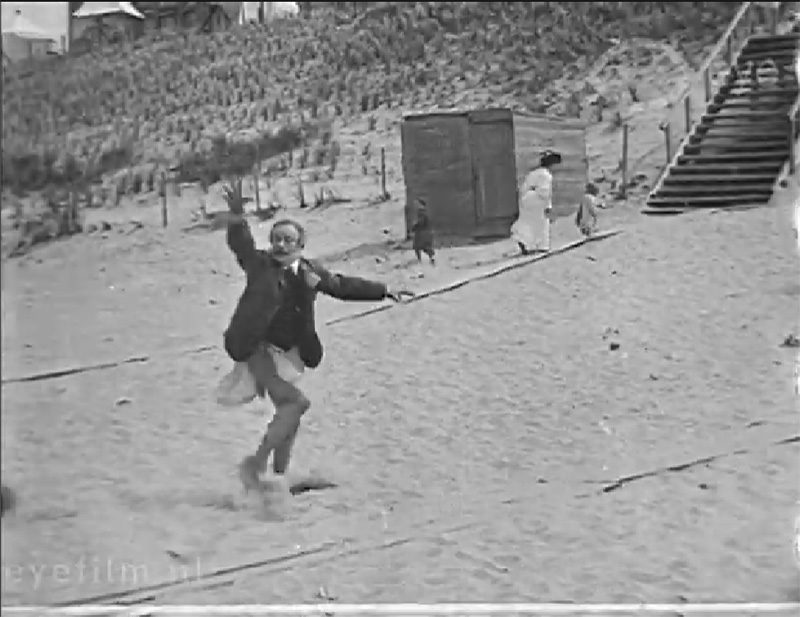
The Misadventure of a Frenchman takes this chase trope and dials it up by increasing the scale. A handful of policeman and robbers? The Dutch film featured dozens upon dozens of beachgoers, some clearly in on the plan and a great many likely just following to see what the hubbub was about. The chaos is advantageous because it creates a more natural scene and the picture’s brief runtime ensures that it doesn’t wear out its welcome.
The Misadventure of a Frenchman Without Pants on Zandvoort Beach is pure unpretentious fun made by people who were clearly having the time of their lives. Fashion devotees will enjoy the authentic portrait of Dutch beachwear and everyone can enjoy the goofy predicament of the unfortunate Frenchman. This is a cute one!
Where can I see it?
Stream for free courtesy of the EYE Filmmuseum.
☙❦❧
Like what you’re reading? Please consider sponsoring me on Patreon. All patrons will get early previews of upcoming features, exclusive polls and other goodies.
Disclosure: Some links included in this post may be affiliate links to products sold by Amazon and as an Amazon Associate I earn from qualifying purchases.
 Movies Silently
What a delightful little film. Everybody looking at the camera, laughing and having such a good time. I enjoyed it very much. Many thanks for reviewing this film. Great fun!
Glad you enjoyed it too! I love seeing the bystanders having so much fun.