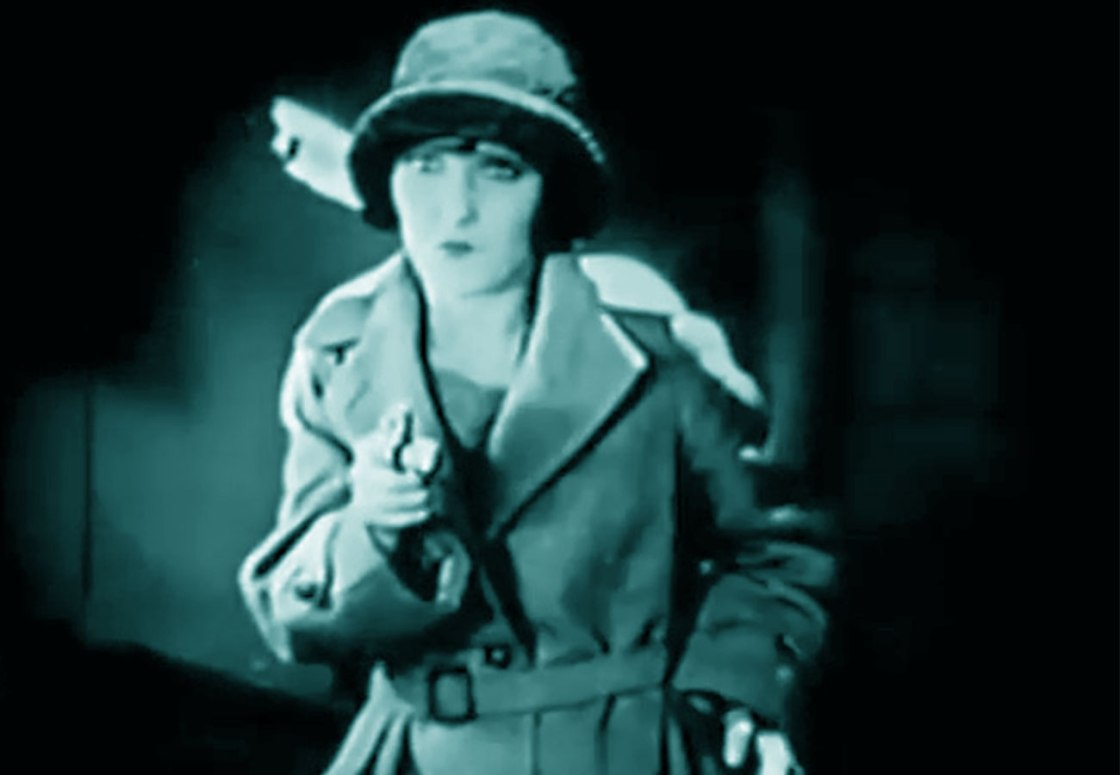
A young chump is framed for murder by a vicious gang of robbers and it’s up to his sister and the friendly mail clerk of the Arizona Express to prove his innocence and win a pardon before he is executed.
Home Media Availability: Released on DVD.
All aboard
Trains have been closely linked to the silent era since the beginning. Cameras were strapped to railway cars to create “phantom rides,” which were a hit with 1890s audiences. The Great Train Robbery remains an iconic example of the movies growing in scale and ambition. The erroneous notion that women were constantly tied to the tracks has yet to retire (the trope was mocked in slapstick comedy and the victim was unfailingly male in serious railway or sawmill peril).
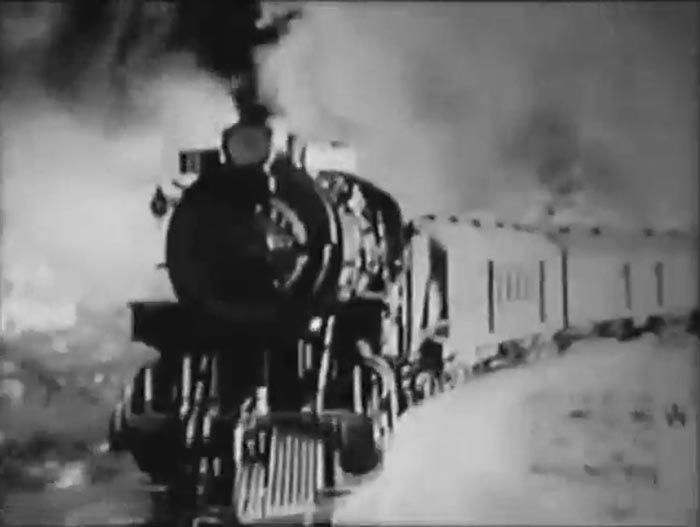
As the main way of transporting people, goods and mail long distances, railroads remained a staple of cinematic action and comedy into the twenties. The Arizona Express was one of many adventure films revolving around train-based antics and it is billed as “an honest melodrama.”
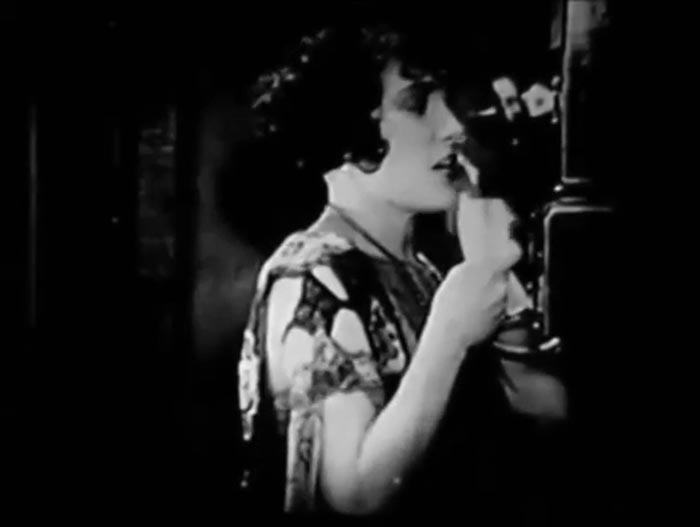
The picture revolves around David Keith (Harold Goodwin), a silly young fellow who tosses aside the nice girl who loves him in favor of a dancer named Lola (Evelyn Brent, her character is called Madeline in the titles of some prints). Lola flatters him, flirts with him and she would just love to see the inside of his uncle’s bank. Only to spend time with David, of course.
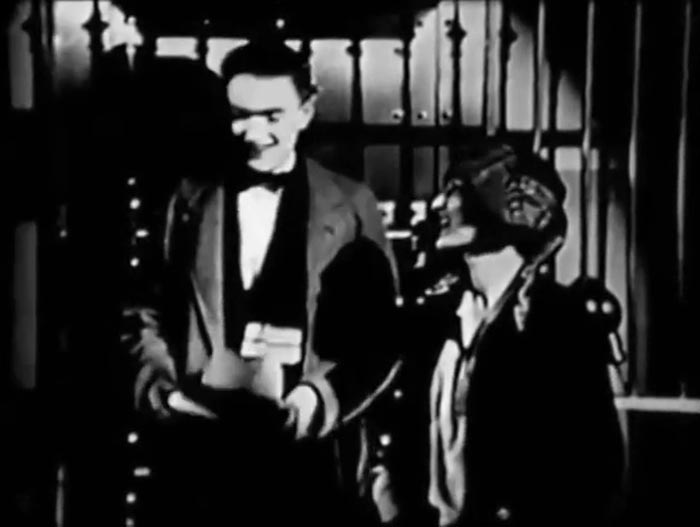
David’s uncle Henry MacFarlane (William Humphrey) is suspicious and confronts Lola in her hotel room. She is there with her partner in crime, Victor Johnson (Francis McDonald), and a map of the bank’s floorplan, all neatly marked for a planned robbery. MacFarlane sees this and Victor murders him to keep him quiet. David, who had been hanging around hoping to see Lola, hears the struggle and rushes up. Victor clubs him over the head and Lola claims that David murdered his uncle.
David is quickly convicted and the governor has no interest in pardoning him. His sister, Katherine (Pauline Stark), cancels her planned foreign aid trip to Asia and returns to help. Things are looking dire.
And here is where the film turns into something else entirely. Up to this point, it has been a pretty typical crime picture with scheming crooks and their patsy with a few stylish moments (the murder scene is quite dramatic) but nothing particularly astonishing.
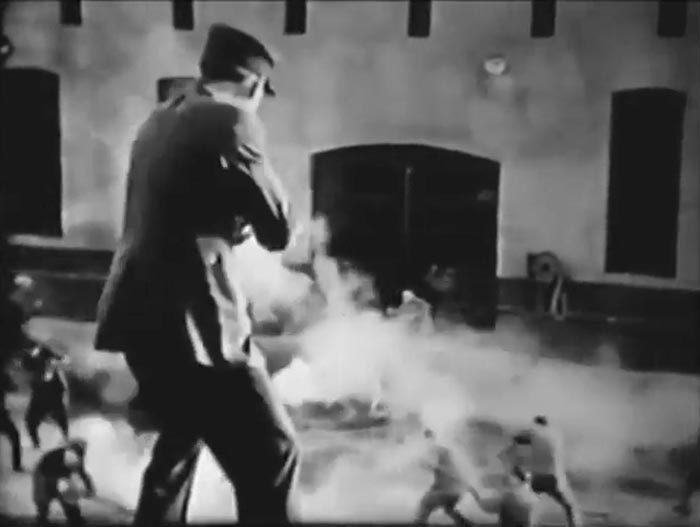
The inmates of David’s prison are planning a jailbreak and they have planned every last detail. They use a smuggled pistol to murder the guard overlooking the train transporting gravel (it’s one of those movie prisons) and then use the train car to smash through the prison wall. Inmates pour out and David is swept along—conveniently being told about Lola’s true character and gangland connections but a fellow prisoner—and manages to get away.
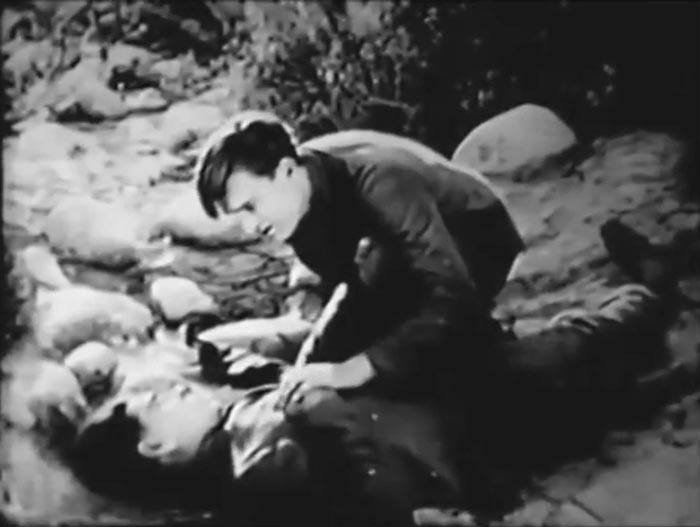
The escape scene is a real showcase for director Tom Buckingham and cinematographer Sid Wagner. Moody shots through the bars, closeups of the inmates as they send secret messages and pass along the gun, and the spectacular crash through the wall… the actions leading up to the jail break is presented with mechanical precision.
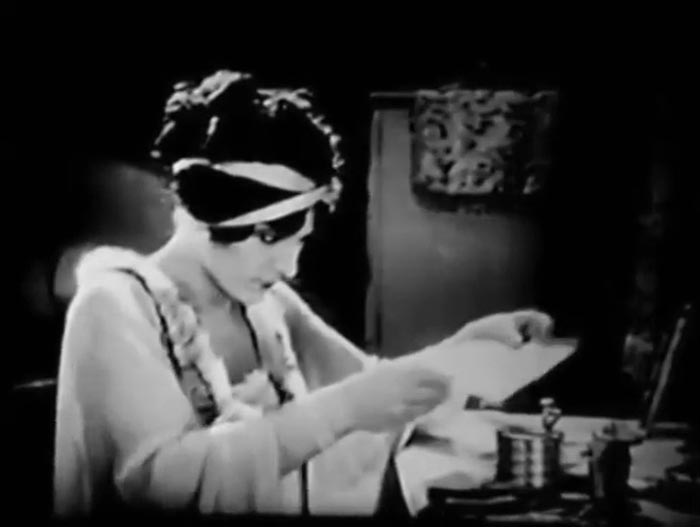
David reconnects with Katherine and she decides to go undercover in order to find evidence against Lola’s gang. This pays off in spades as Victor has sent Lola an incriminating letter and Katherine manages to steal it. The gang catches on and it looks like our heroine is in peril but she has a pistol in her purse and knows how to use it.
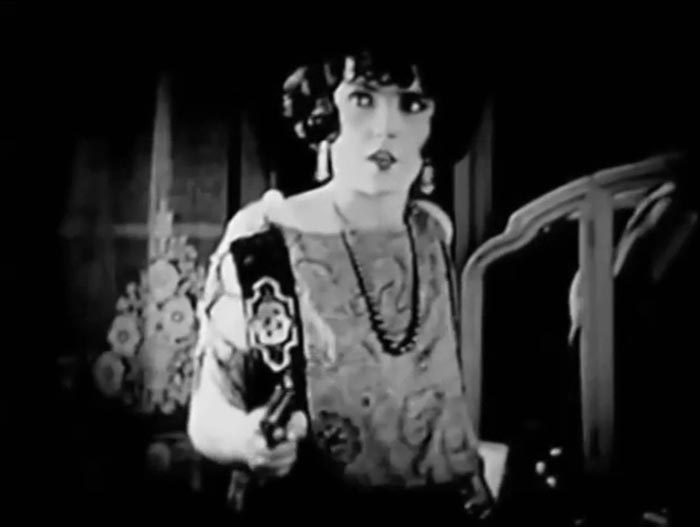
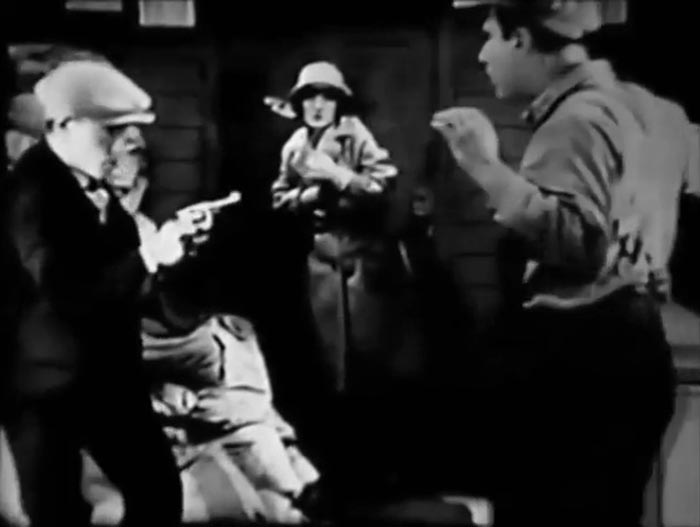
David has been recaptured, so it is a race to the governor’s mansion on the Arizona Express with the help of Steve (David Butler), the train’s dishy mail car clerk. The gang swarms the train and Katherine is set upon at every turn but she is determined to reach the governor before her brother’s execution.
The climactic train sequence is even more spectacular than the jailbreak. Crooks leaping onto the train from tunnels and moving cars, shootouts in the mail car, a runaway engine, chases on train, foot, car and horseback with fistfights and literal cliffhangers. No rear projection, of course, but lots and lots of death-defying stunts on a real train. Highly recommended viewing.
I have absolutely no complaints about this film on a technical level. The acting… eh. Starke takes the melodrama description a little too literally and does a lot of arm flailing. Butler doesn’t carry on quite as much but he is a bit puppyish in his performance. Goodwin is better with a meatier role but the standout is Brent, who was usually associated with this kind of tough dame role and would find major fame under the direction of Josef von Sternberg.
If the story of this picture sounds a bit familiar, well, you’ve probably seen some version of it if you’ve watched any amount of Old Hollywood entertainment. Pardons were wildly popular plot devices in the silent era, to the point where I think more pardons were granted onscreen than in real life.
And filmmakers were creative. Governors were the usual benefactors but presidents were also called upon, both modern and historical. The 1911 film Abraham Lincoln’s Clemency rather gives away the ending in the title. And the 1914 film The Governor’s Pardon offered a localization option with the governor of the appropriate state being seen to grant the pardon.
(I presume that the governor was shown from the back and the correct signature was substituted in closeup as I cannot imagine all 48 governors agreeing to a cameo. The logistics would have been quite tangled.)
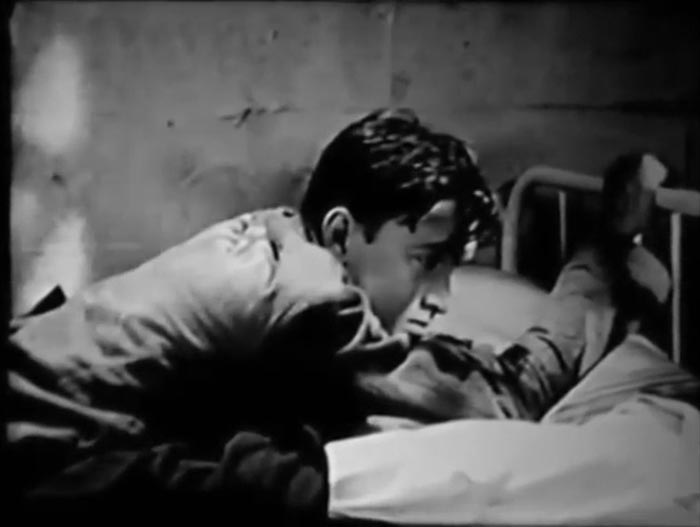
And, naturally, pardons were no good for drama if they were granted months, weeks or days before the execution. Our poor victim must be on the very edge of the gallows or at least in the death cell awaiting their fate. This is a by the book melodrama but that is probably because it was written by the man who also wrote that book.
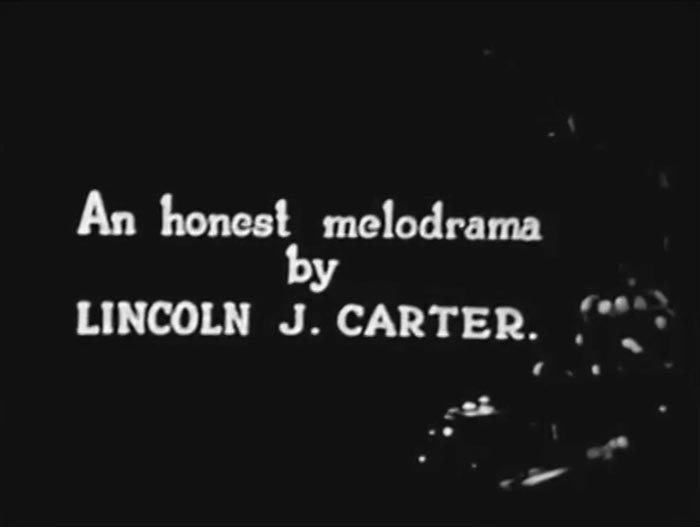
The name Lincoln J. Carter doesn’t mean much anymore but the opening titles of The Arizona Express make sure to tell us that he is the author of this “honest melodrama.” This odd description was due to Carter’s fame as an author of blood and thunder railway melodramas on the stage. He didn’t invent the genre but he refined it and his plays were smash hits, if hardly critical darlings, prior to World War One and the dominance of feature-length films. By the twenties, the motion pictures had eaten up any potential audience for such productions and Carter wrote a piece for the New York Times entitled Melodramas Killed by Films.
Despite the breathless title, the piece is not bitter or resentful. Carter acknowledges that he would like to continue his career but he also recognizes that the world has moved on and embraced motion pictures. Trade coverage of The Arizona Express claimed that Carter helped adapt the original play to the screen but doesn’t go into detail about how deeply he was involved in the production. (I cannot find a record of the original play but Carter’s work was not respected by the establishment and may have been ignored in the trade press.)
So, if The Arizona Express seems old school, it’s because it is a pedigreed example of the classic melo. Reviews of the time all agreed that the picture was old-fashioned and was slow to get going but quickly made up for it with exciting action that doesn’t let up.
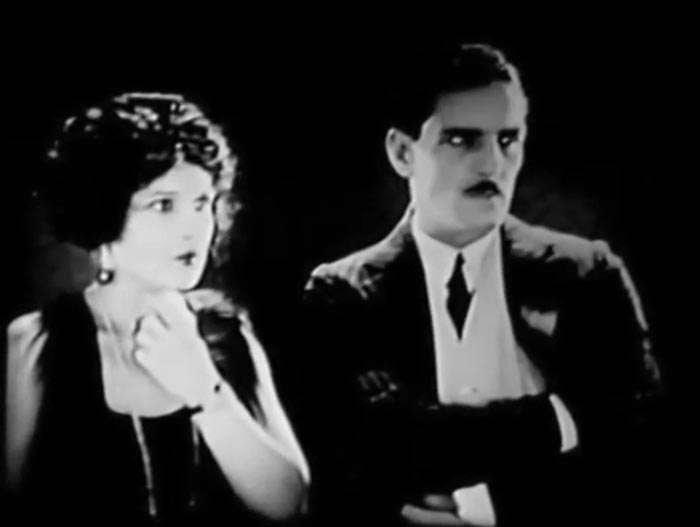
Moden viewers tend to associate melodrama with one archetype, the Snidely Whiplash-type villain. This is an oversimplification and the melodrama villain was never taken particularly seriously, even in the nineteenth century. In fact, looking at the dictionary definition of a melodrama, emphasizing incidents and plot twists over quieter, more contemplative scenes fits our modern spoilerphobic era to the letter. Melodrama didn’t die, it lived on in action films.
As a result, The Arizona Express is a valuable example of the transition from classic melodramas to modern action films. In fact, the story of the two-fisted mail sorter and the gun-toting foreign aid worker could easily be adapted to film today with just a few tweaks.
There isn’t really anything new in The Arizona Express but all the old stuff is shined up and runs like a well-oiled machine. The climactic race to the governor’s mansion, with nonstop action in, on and under a running train, has aged particularly well and should thrill fans of stunts and derring-do.
Is it a masterpiece? No, but not every movie we see needs to be one. This is fun, entertaining and extremely well-made. Audiences of 1924 liked it and I think it is just as appealing today. Be patient with it up until the jailbreak scene and then hold on because it becomes a wild ride from there!
Where can I see it?
☙❦❧
Like what you’re reading? Please consider sponsoring me on Patreon. All patrons will get early previews of upcoming features, exclusive polls and other goodies.
Disclosure: Some links included in this post may be affiliate links to products sold by Amazon and as an Amazon Associate I earn from qualifying purchases.
 Movies Silently
The word “melodrama” has a different meaning in opera, referring to a scene where spoken dialogue is punctuated by music. The most famous example is one in Beethoven’s Fidelio, where Rocco and Leonore make their way into the dungeon, which is melodramatic in both senses. I don’t know exactly how the sense of the word shifted.
I suspect in the 19th century, around the time melodramatic plays and books in their modern sense came to be.
Not a masterpiece, but I thoroughly enjoyed it. The train scenes towards the end of the film were so exciting. Well done to the actors or stunt persons who performed those scenes. And you are right, the young man was a “chump”! LOL 😄. Many thanks for your excellent review.
Yes, there’s a lot of fun to be had in the “not art but great action” department here. Glad you enjoyed!