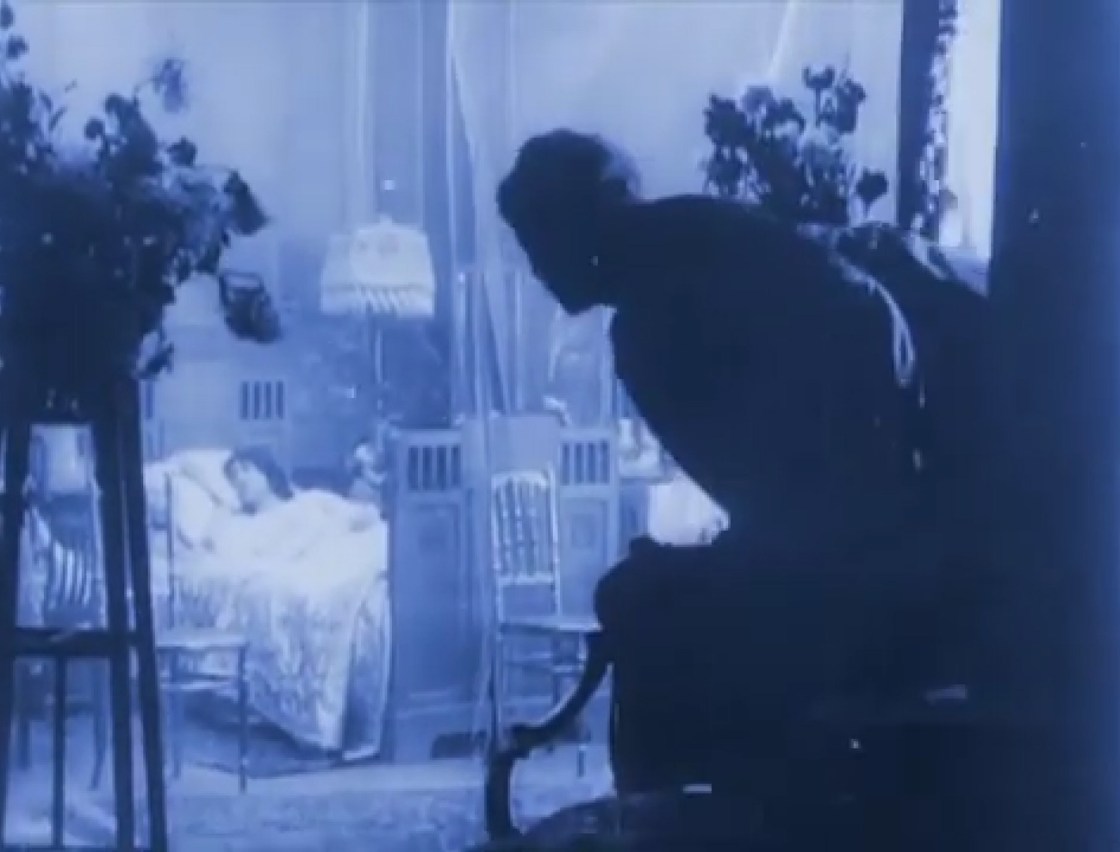
An aristocrat is bored with the dull duties of society but she comes to life when she begins to help the poor in her neighborhood. Events take a nightmarish turn and send her hurtling toward an operatic finish.
Home Media Availability: Released on DVD.
Outplaying Verdi
Yvgeni Bauer is rather obscure these days, a forgotten artifact from a doomed empire in its last years of existence. His films centered on love, madness, obsession and, most of all, death among the beautiful people of the Russian Empire’s aristocracy. His necrophilia was prescient; neither Bauer nor the empire survived 1917.
Politically out of step with the Soviet Union, Bauer’s surviving films languished until the end of the Cold War. Thanks to home media releases of some of his films over the past few decades, Bauer has enjoyed a small but well-deserved revival and Twilight of a Woman’s Soul is the earliest of his films to be made available.
The story centers on Vera (Nina Chernova), a debutante who finds her life of parties and polite conversation to be empty and meaningless. She finds her calling when her mother takes her to call on the poor. Vera is naïve and fails to realize that all of her mother’s charges are putting on a show to gain additional aid.
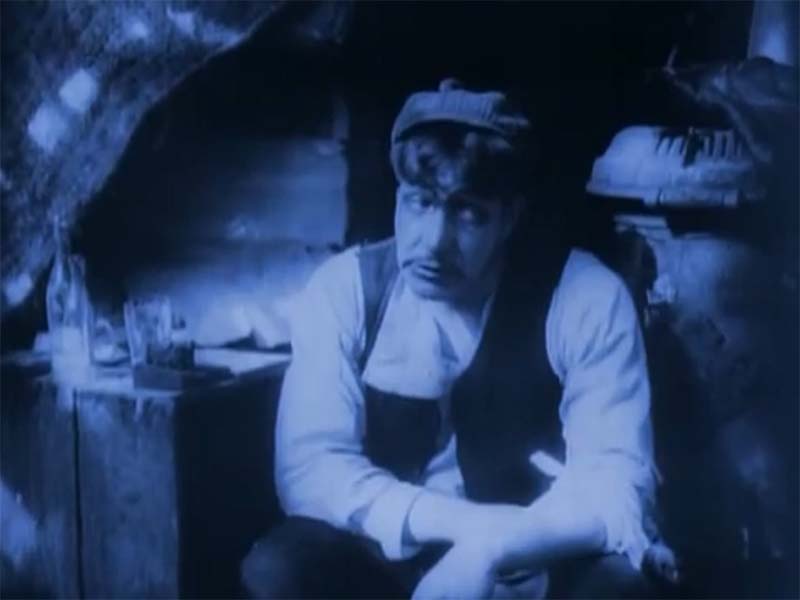
One of them, a man named Maksim (V. Demert, also the credited screenwriter) conspires to lure Vera to his room alone by pretending to be ill. Once she arrives, he rapes her and then falls into a drunken slumber. Vera bludgeons him to death as he sleeps and flees.
Some time passes and Vera catches the eye of the wealthy Prince Dolsky (A. Ugryumov). She wants to confess all to him but he assures her that he loves her no matter what her past might be. All of her subsequent attempts to explain her past are thwarted and they are married. When she finally tells him (Bauer employs flashbacks to show that her account is both accurate and complete), Dolsky flies into a rage. Vera coldly tells him that she pities him and leaves. Dolsky wants to stop her but his pride does not allow him.
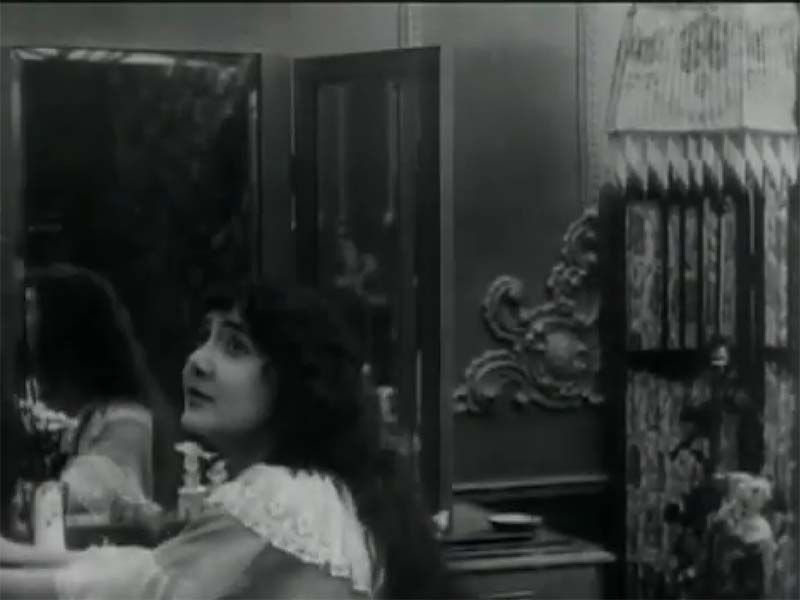
He spends the next year trying to forget with wine, women and song. (The double standard being firmly in place: purity for the woman, wild oats for the man.) He rages at the women he has hired to entertain him and decides to find Vera but all he can discover is that she has left Russia.
In fact, Vera has built a career for herself in an opera company under an assumed name. Motion picture women living in the Russian Empire always seemed to have professional-level dancing and singing skills to fall back on in the event of turmoil. The German production of The White Devil took its heroine from the Caucasus to the ballet stage of St. Petersburg, while the pre-Hollywood U.S. films The Cossack Whip and The Dancer’s Peril both had heroines evading wicked aristocrats en pointe.
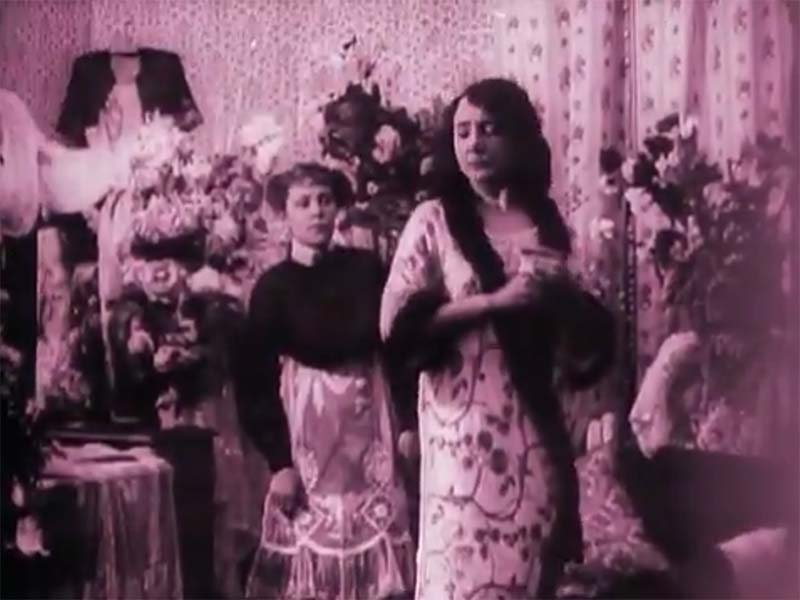
Prince Dolsky had given up on finding her but is persuaded to attend a performance of La Traviata and, you guessed it, Vera plays the lead. He is determined to apologize and win back his wife. Will he succeed?
(Spoiler: He will not.)
The plot of Twilight of a Woman’s Soul should be a familiar one for devotees of silent film. Sexual assault and the damage left in its wake was a popular topic that was heavily used around the world. Pioneer Vasily Goncharov explored the theme with the classes flipped in The Peasants’ Lot (1912). In that picture, a country girl is assaulted by her wealthy employer and must deal with the fallout when the boy she left back home finds out. (The ending of the film is lost, we do not know its resolution.)
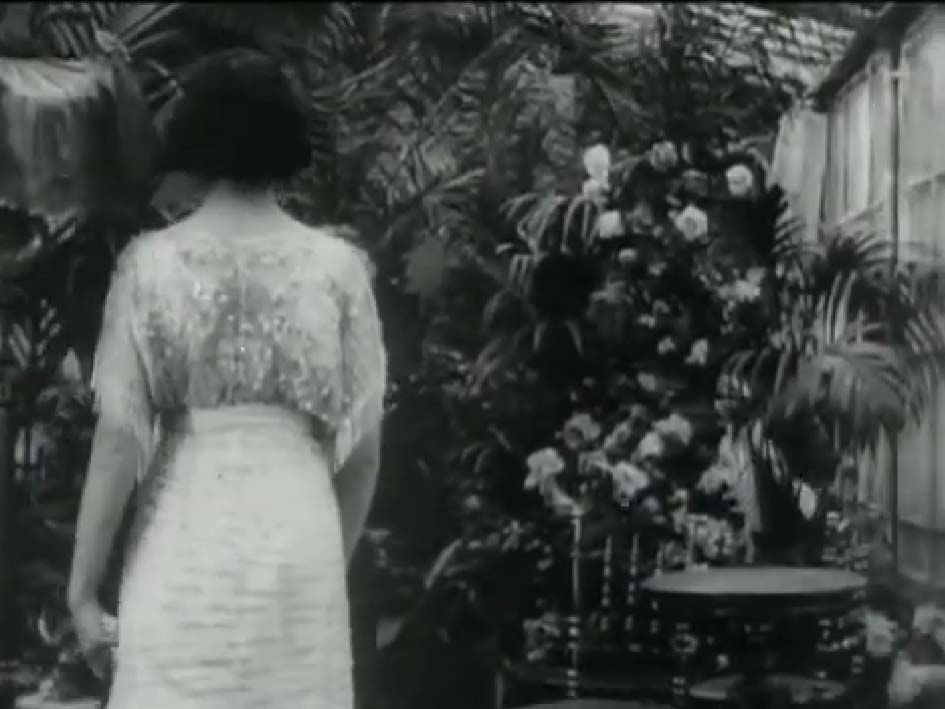
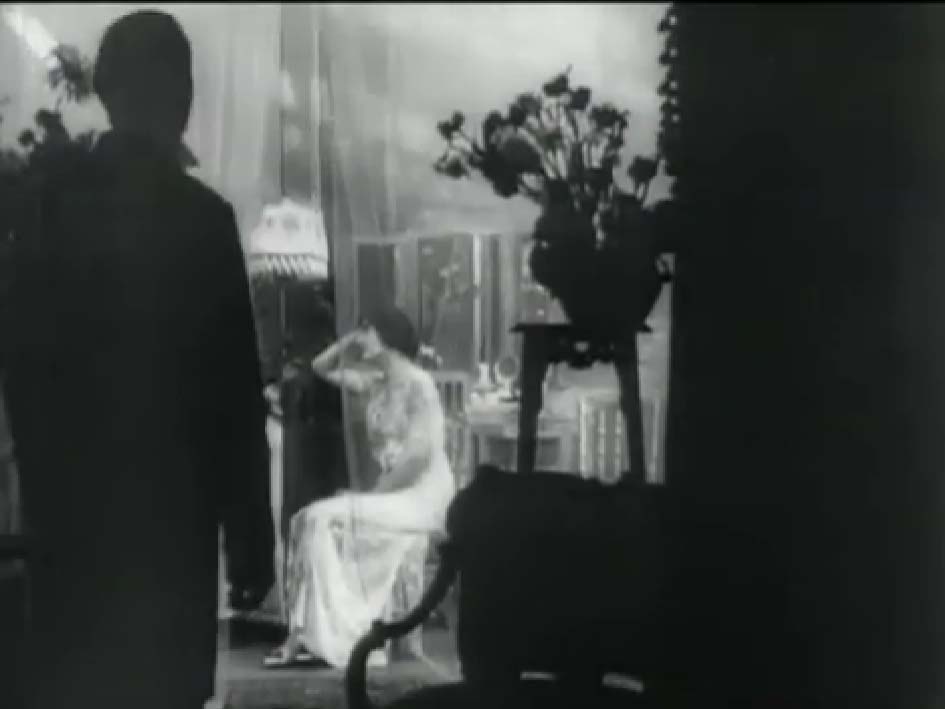
What really sets Twilight of a Woman’s Soul apart is Bauer’s imaginative direction and design, as well as the stunning cinematography of Nikolai Kozlovksy. The film was clearly shot in cramped studio sets, for the most part, but the shots have depth and moody lighting, the layering of silhouettes against sheer curtains, darkness against the fragile and delicate. Most of the film’s action is captured in the kind of straightforward medium and long shots we associate with pre-WWI cinema but there is one ominous scene taken with a rooftop camera.
Bauer’s films also famously made use of tracking shots in a non-pursuit context, in this case, the camera following Vera as she wanders aimlessly around the perimeter of her mother’s party, divided from the gaiety by a hedge of ornamental flowers.
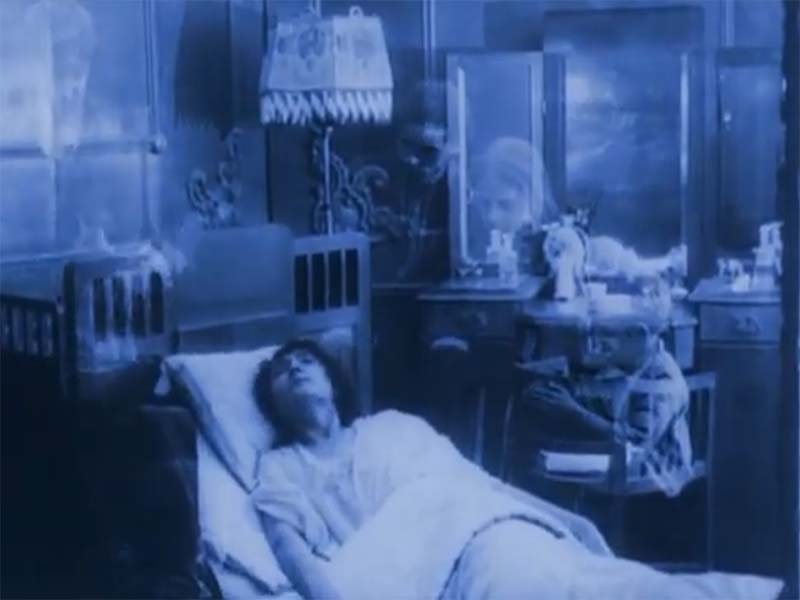
Nina Chernova does wonderful work as Vera, underplaying her performance in an era when stage-trained actors sometimes fell victim to the urge to play to the cheap seats. This wasn’t always a bad thing but Bauer’s tale calls for a particular light touch. (Costar Ugryumov does his share of flailing in the picture, proving to be something of a weak link.) Her sensitive performance and transformation from an innocent plagued by ennui into a self-assured woman who knows her worth is subtle and satisfying.
Bauer made the choice to name Verdi’s La Traviata as the opera being performed by Vera when Prince Dolsky discovers her. Presuming his choice was as well-considered and intentional as his other creative decisions, it seems that Vera has learned a thing or two from the character she is performing. La Traviata was based on Camille by Dumas fils and revolved around the doomed love affair between a naïve young man and Violetta, a courtesan dying of tuberculosis. He doesn’t understand that she is ill and treats her poorly without knowing or appreciating her self-sacrifice. His apology beside her deathbed comes too late.
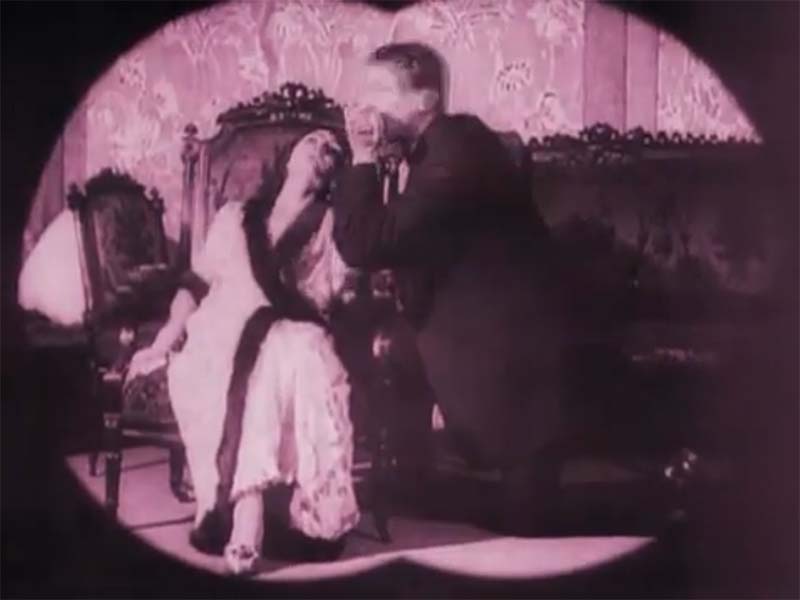
Parallels between Vera and Violetta are obvious but Vera is not about to die of consumption or sit around waiting for an apology from her husband. She had taken the reins of the relationship when she left Dolsky and now she continues to assert her independence by refusing to be the gracious opera heroine. Violetta may have died in her remorseful lover’s arms, Vera intends to live on her own terms.
Considering the portrayal of the working class in the film—every last one is a grifter at best and a violent predator at worst—it is safe to assume that Bauer was aiming squarely for the bourgeoisie and higher as his audience. In other words, people likely to have some passing familiarity with La Traviata. (I do wonder how his pictures played to working class audiences.)
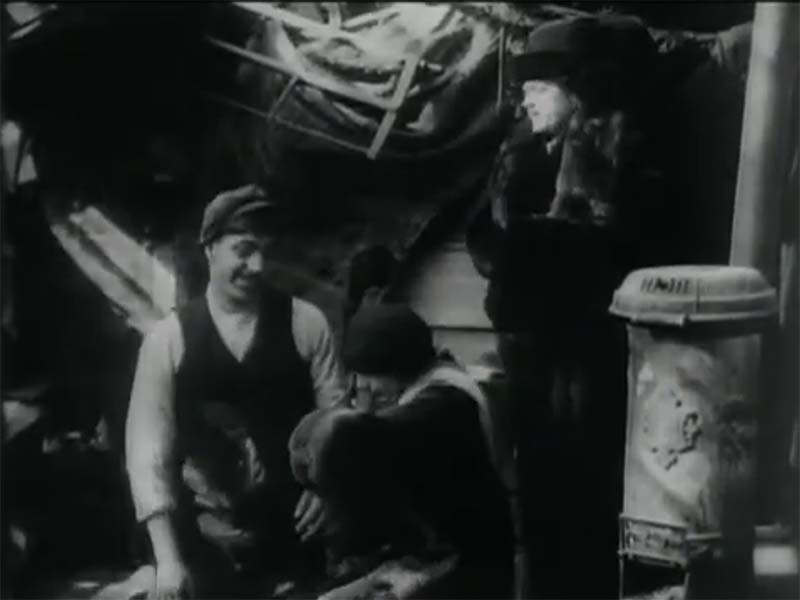
This brings us to another aspect of Bauers films: they are beautiful to look at and their unique melancholy still casts a spell but they take on added meaning in context of the historical events that would follow just a few short years later. The characters of Bauer’s films are doomed but the entire society that he was portraying teetered on the edge of a knife and would utterly collapse before the end of the decade.
The revolution in Russia did not come out of nowhere and there had been numerous rumblings prior to 1917. Whether consciously or subconsciously, Bauer was creating the motion picture obituary for a still-living culture, which adds chilling depth to his films. (And shows why the bromide “You have to watch films as the audiences of the day did, you can’t bring in modern perspective” is so ridiculous. A century of perspective has done nothing but strengthen Bauer’s films.)
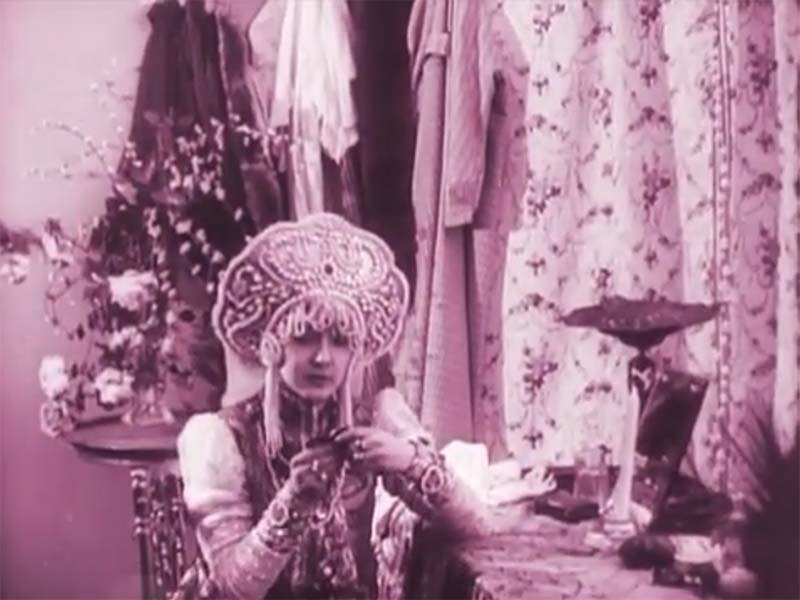
Twilight of a Woman’s Soul shows Bauer with a powerful grasp of cinematic technique early in his career and, as is always the case with artists who died young, makes us wonder what he might have accomplished had he lived. This trim four-reel feature is an excellent showcase of his signature style.
Where can I see it?
Released on DVD as part of the collection Mad Love: The Films of Yevgeni Bauer from Milestone.
☙❦❧
Like what you’re reading? Please consider sponsoring me on Patreon. All patrons will get early previews of upcoming features, exclusive polls and other goodies.
Disclosure: Some links included in this post may be affiliate links to products sold by Amazon and as an Amazon Associate I earn from qualifying purchases.
 Movies Silently